 exoticsgroup.com
Hot Air, Zero Swirls: Why MetroVac's All-Steel Dryers and Vacuums Belong in a Supercar Garage

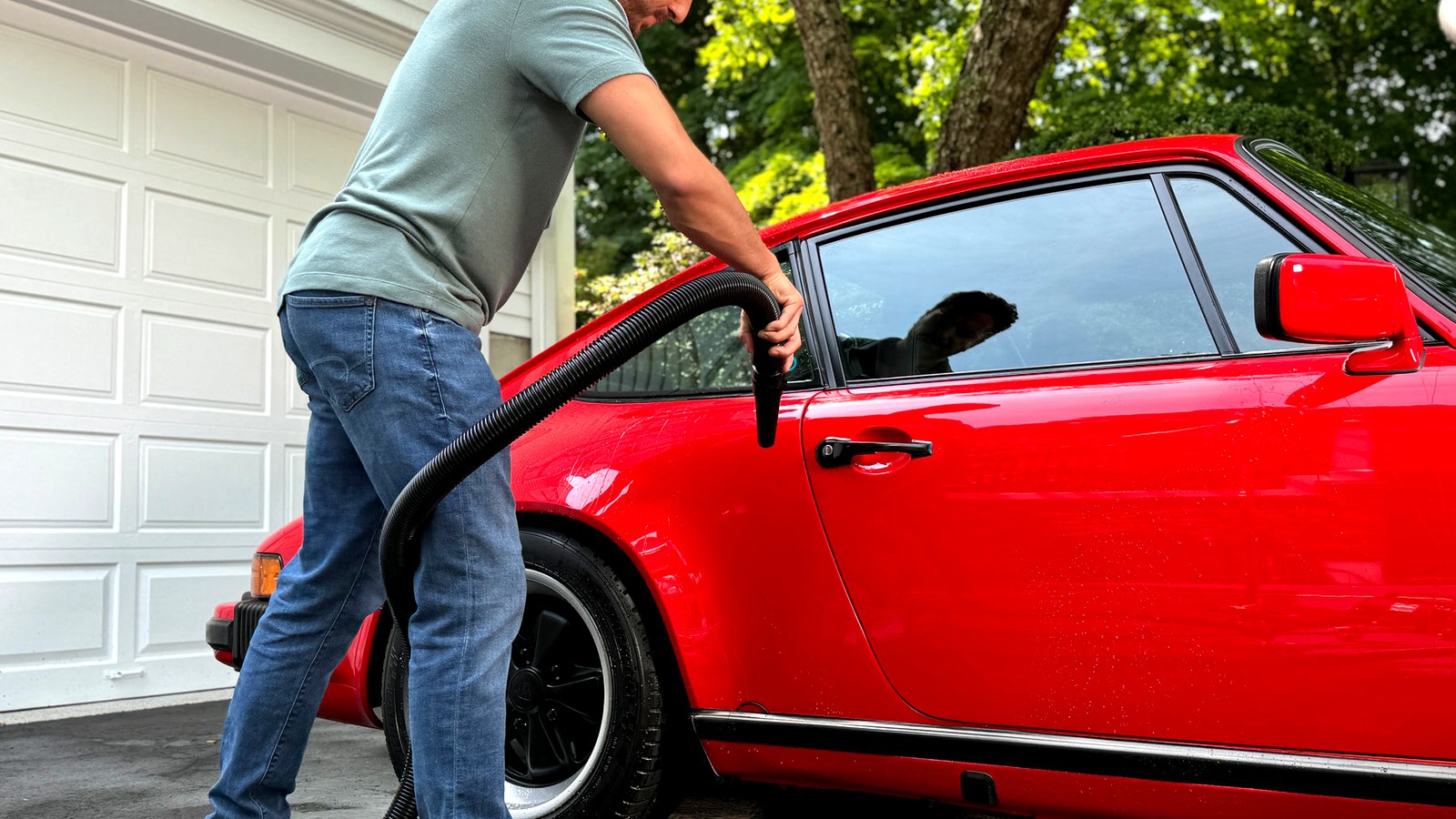
You just spent a Sunday morning washing a car that cost more than some houses. The paint is flawless, the PPF is gleaming, and the ceramic coating is beading water like it's showing off. Then comes the part most owners dread: drying it. Every pass of a towel is another chance to drag a speck of grit across the clear coat. Every drip that sneaks out of a mirror or a badge on the drive home leaves a streak. There's a better way, and it's surprisingly simple: don't touch the paint at all. Blow the water off.
That's the whole idea behind a car dryer, and few companies have been at it as long or as seriously as MetroVac, the New Jersey family business behind the Air Force Master Blaster. MetroVac vacuums, blowers and car dryers are now in the Exotics Group store, so we dug into what makes them tick. This guide starts with the basics of touchless drying, then gets into the hardware: three MetroVac machines we think belong in a serious garage, what their specs actually mean, and a step-by-step drying routine for a car that deserves better than a beach towel.
Who is MetroVac?
MetroVac's story starts with a pocket watch. In 1939, according to the company's own history, Hyman Gulker pawned his prized watch for $50 and gave the money to his daughter and son-in-law, Pearl and Israel Stern. Israel had been selling vacuum cleaners door to door. With that $50, the couple launched the Metropolitan Vacuum Cleaner Company. People soon shortened the name to MetroVac.
What followed was a run of firsts. MetroVac says it introduced the first 110-volt handheld vacuum cleaner in 1957 and the first 12-volt automotive handheld vacuum, the kind that plugs into a cigarette lighter, in 1964. The company entered the motorcycle market in 2002 with the Air Force Blaster motorcycle dryer. In 2008 it launched a full line of car vacuums and car dryers, including the Master Blaster, aimed squarely at professional detailers and enthusiasts. In 2013, MetroVac moved into a 60,000-square-foot manufacturing facility in Oakland, New Jersey, where it still builds and repairs its machines.
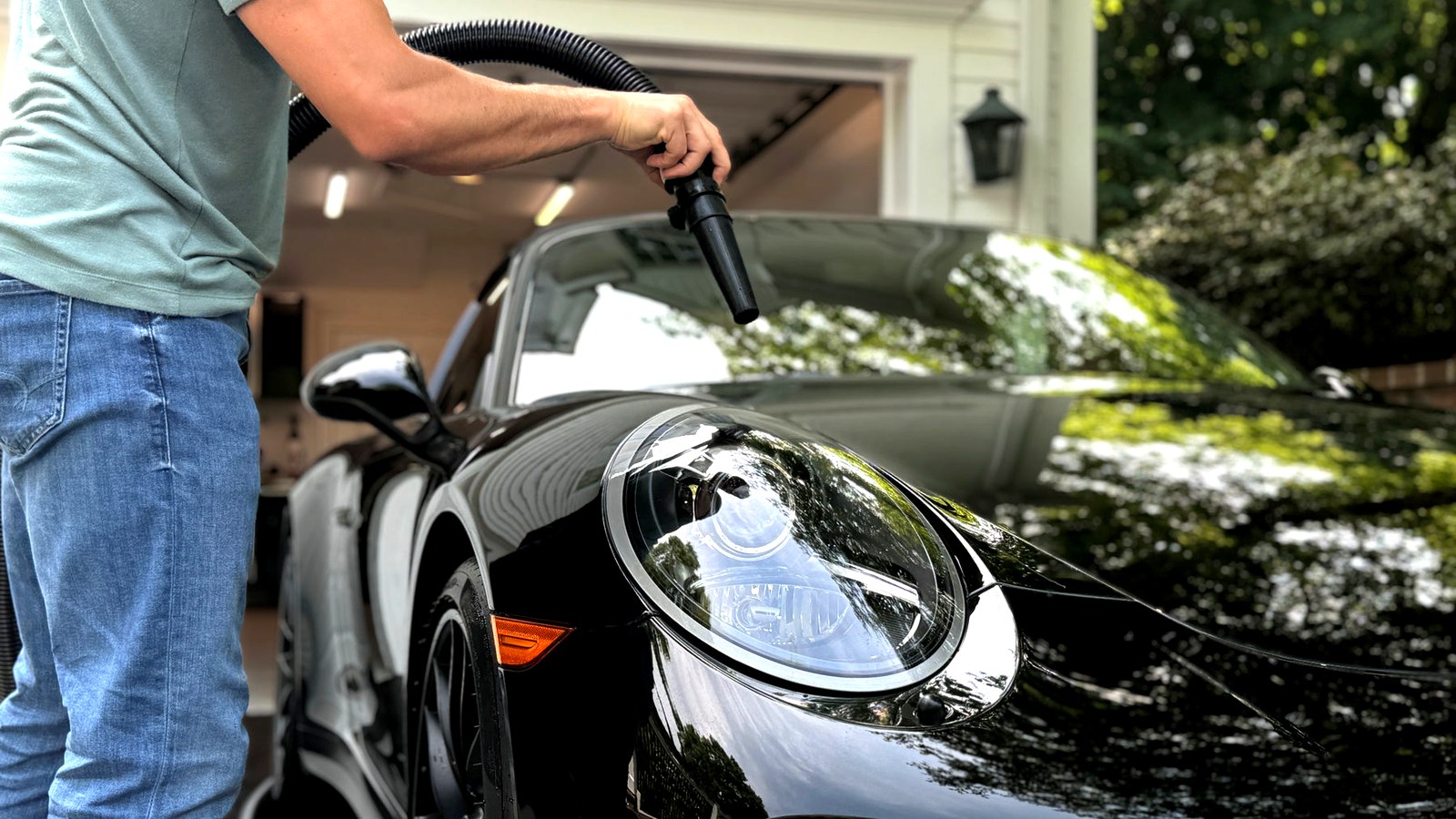
It is still a family business. MetroVac describes itself as a third-generation, family-owned American company. Hagerty, which tested several MetroVac machines in 2023, notes that four generations of the family have worked there and quotes President and CEO Ken Stern: "We will continue to innovate and introduce new products into the markets we serve and carry on the tradition that my family started in 1939."
Built like they used to
Three things set MetroVac apart, and each one matters to anyone who keeps a car for the long haul.
- Steel, not plastic. MetroVac says all of its vacuum cleaners use "robust, all-steel construction." Every machine in this guide lists all-steel construction with a black matte finish.
- Made in America. MetroVac says every product is "meticulously assembled in the USA," made from domestic and international components. NJBIZ, profiling the company for its 75th anniversary, described a line of "hand-assembled vacuums, dryers and electric inflators."
- Backed for years. The Master Blaster and Vac N Blo in this guide carry MetroVac's Five-Year Limited Warranty on the motor and a One-Year Limited Warranty on parts, switches and cords, as listed on our product pages. There's no registration card to lose: MetroVac puts a date code on every machine and uses that, or your receipt, for warranty work. Repairs are done at the company's Oakland facility.
The long-term support goes beyond the warranty. Jules Stern, then MetroVac's president, told NJBIZ in 2014: "We also get calls asking if we have paper bags for a product we manufactured 40 years ago. Sure we do!" Hagerty's verdict on the Master Blaster sums up the brand: it's exactly what people picture when they say "they don't build 'em like they used to." Then the reviewer adds: "Except over at MetroVac, they still do." Because MetroVac sells replacement parts all the way up to the motor, Hagerty concluded that a MetroVac "could literally be the last vacuum or blower you ever buy."
Why air beats a towel on paint, PPF and ceramic coatings
Here's the beginner's version. Paint scratches when something hard is dragged across it. After a wash, that something is usually a tiny bit of grit the wash missed, and the thing dragging it is your towel. Hagerty's reviewer, a detailer of more than 20 years, put it plainly: "every time you touch the paint of a car you risk leaving swirl marks." Air never touches the surface, so it can't drag anything across it.
The second problem is water you can't reach. Mirrors, grilles, badges, panel gaps, lug nut holes and door jambs all hold water that a towel never sees. That water dribbles out later and dries into streaks and spots. A strong, focused stream of air pushes it out before you drive away. Hagerty found the Master Blaster cleared water from "grills, wheels, mirrors, door jams, and all the areas that can't be dried with a towel."
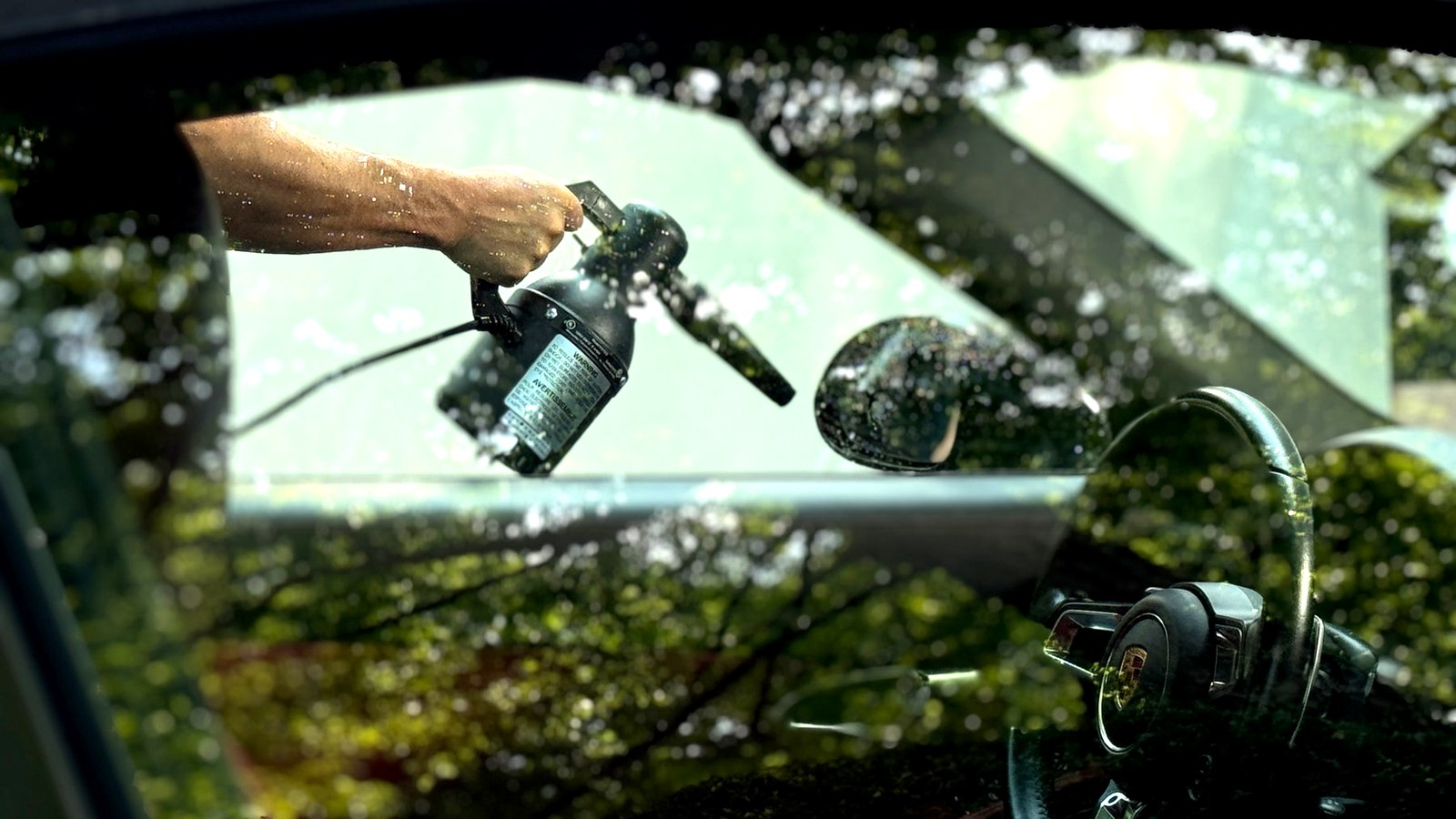
Protected cars benefit even more:
- Paint protection film. XPEL, one of the best-known PPF makers, tells owners of its color PPF to dry the vehicle after each wash "using an electric blower or plush microfiber drying towel." XPEL also warns that a pressure washer aimed at film edges can lift the film. A dryer's air is far gentler than a pressure washer, but the same habit is smart: sweep the air across an edge instead of jamming the nozzle into it.
- Ceramic coatings. A coated car sheds water easily, so air does most of the work. A detailer who reviewed the Master Blaster for Detailed Image notes that a car "well protected with a sealant or coating" is much easier to dry without water spots.
- Matte and satin finishes. As our wraps explainer (linked at the end) covers, factory matte and satin paint is notoriously tricky to care for and repair, and Avery Dennison says matte films are especially sensitive to cleaners, wax and polish. The less you rub these finishes, the better, and air doesn't rub at all.
MetroVac's dryers blow warm, filtered air. Our product pages say the Sidekick's air comes out about 30 degrees Fahrenheit above room temperature. MetroVac's FAQ says the Master Blaster can reach up to 60 degrees above ambient, depending on the settings. The warmth helps water evaporate before spots can form, and the filter keeps the dryer from blasting dust back onto clean paint. The Master Blaster's own product copy sums up the appeal: "Air Gun performance without the danger of compressed air."
The Air Force Master Blaster MB-3CD: the full-car dryer
If you only buy one MetroVac for your exterior, this is the one. The MetroVac Air Force Master Blaster MB-3CD is the machine detailers reach for when they want to dry a whole car without a towel. MetroVac says the Master Blaster will completely dry a full-size car in 15 minutes.
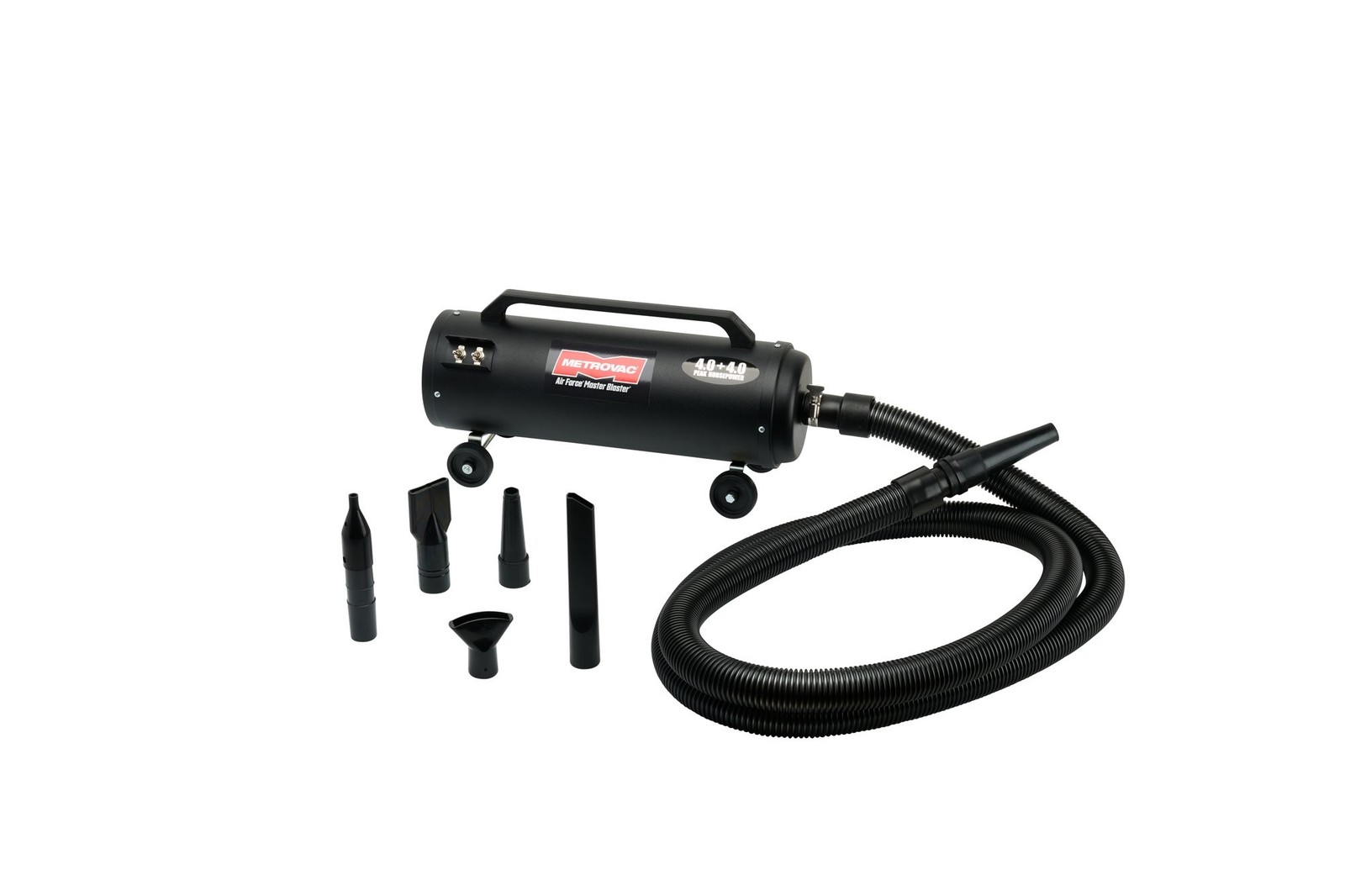
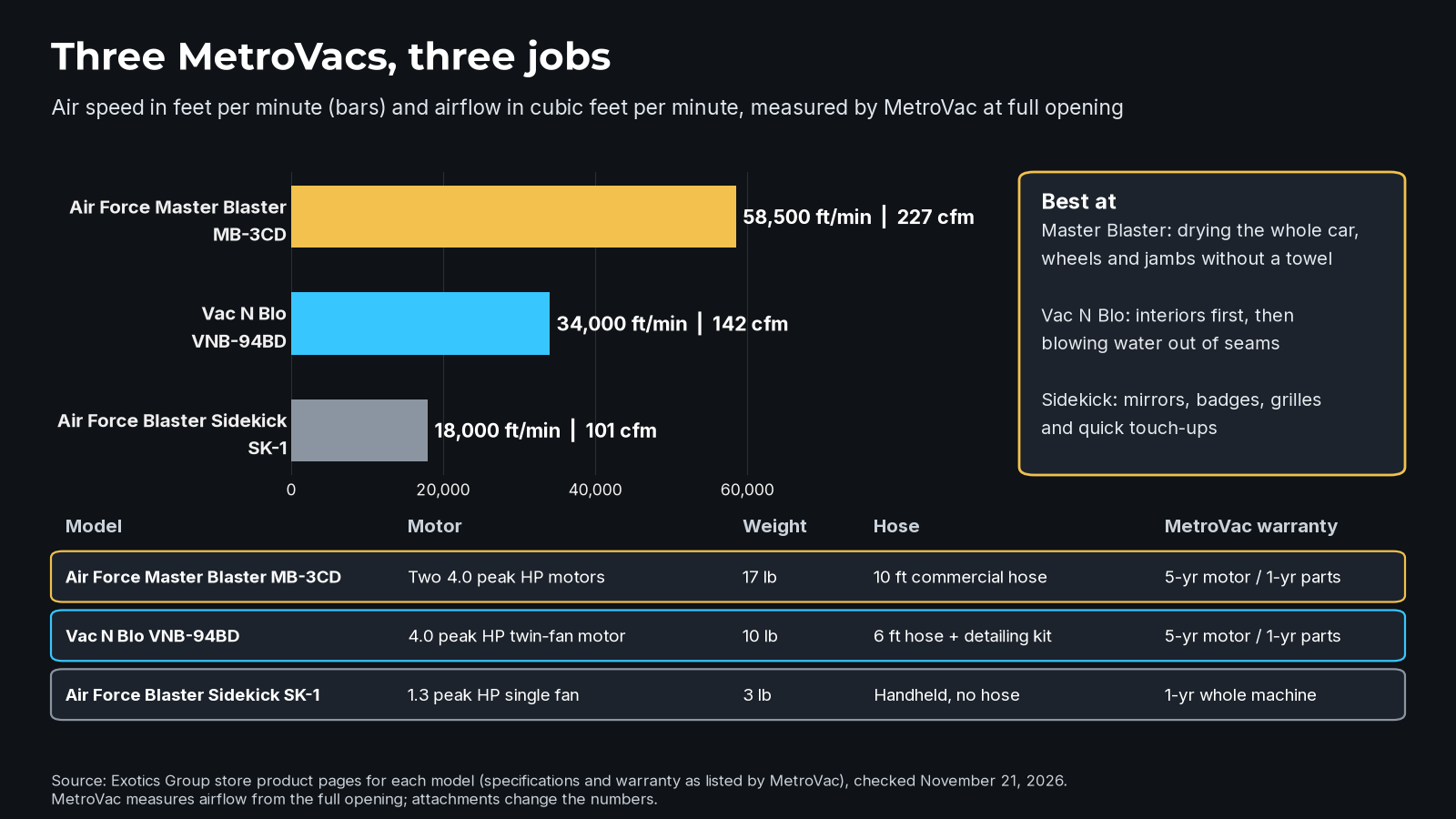
Hagerty and Detailed Image both tested the Master Blaster Revolution version, and the numbers on our MB-3CD product page explain why reviewers love it. The MB-3CD uses two 4.0 peak horsepower motors and moves 227 cubic feet of air per minute at a velocity of 58,500 feet per minute, as measured by MetroVac from the full opening. Each motor has its own switch. MetroVac's FAQ says that gives you three airflow and heat levels: either motor alone or both together. Running both is where the Master Blaster earns its name. Hagerty's tester said it "blew dirt off the bottom of my driveway 20 feet away when I turned it on."
Here's what else is on the spec sheet:
- Build: all-steel construction with a textured matte black finish, on stationary wheels. It weighs 17 pounds.
- Reach: a 10-foot commercial hose and a 12-foot grounded cord.
- Accessories: a crevice tool, a 1.5-inch neoprene blower nozzle, an air flare, an inflator adapter and a hose and air-stream adapter.
- Power: it draws 18 amps on a 110- to 120-volt outlet. That's more than a 15-amp household circuit is rated for, so plan to plug it into a 20-amp garage circuit.
Two ownership tips from MetroVac itself: if you run only one motor, switch between the front and rear motors from time to time so the carbon brushes wear evenly. And if the hose cuff ever unscrews, it isn't broken. MetroVac deliberately leaves one hose end unglued for flexibility, so you simply screw it back on.
Price on our store: $876.69 (guest price on the product page, checked November 21, 2026). Members may see lower prices on many store items.
The Air Force Blaster Sidekick SK-1: the detail sniper
Not every drying job needs eight horsepower. The MetroVac Air Force Blaster Sidekick SK-1 is a handheld dryer for the spots where water likes to hide. Think side mirrors, badges, grilles, light housings, the gaps around a carbon aero kit, and the spokes of a center-lock wheel.
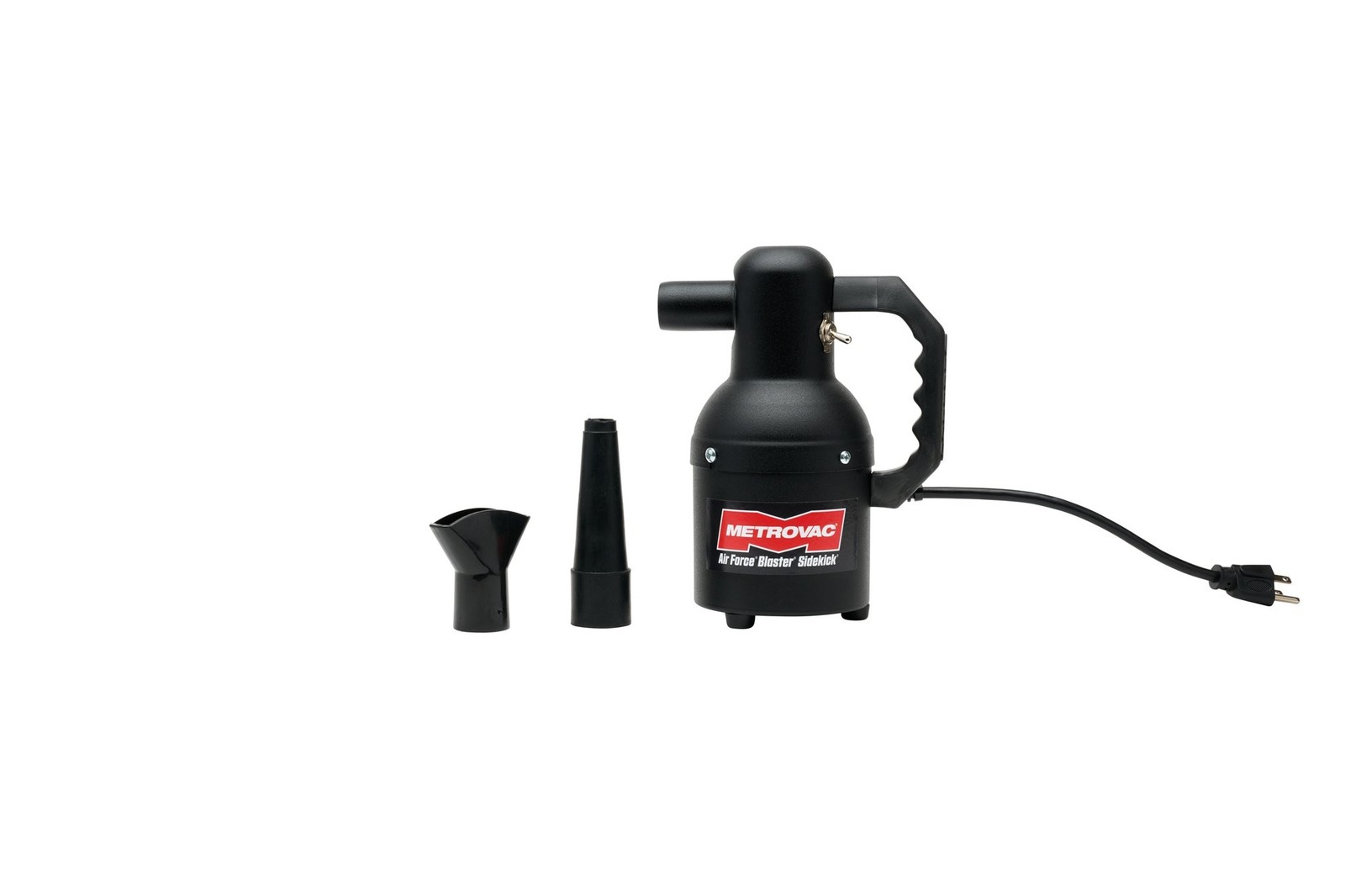
According to our product page, the Sidekick weighs about three pounds and pairs an all-steel body with a 1.3 peak horsepower motor. That's enough for 18,000 feet per minute of warm, filtered air, about 30 degrees Fahrenheit above room temperature. It comes with a durable neoprene nozzle and an air flare, and its "EZ Change" foam filter keeps grit out of the airstream. MetroVac calls the steel shell "nearly indestructible."
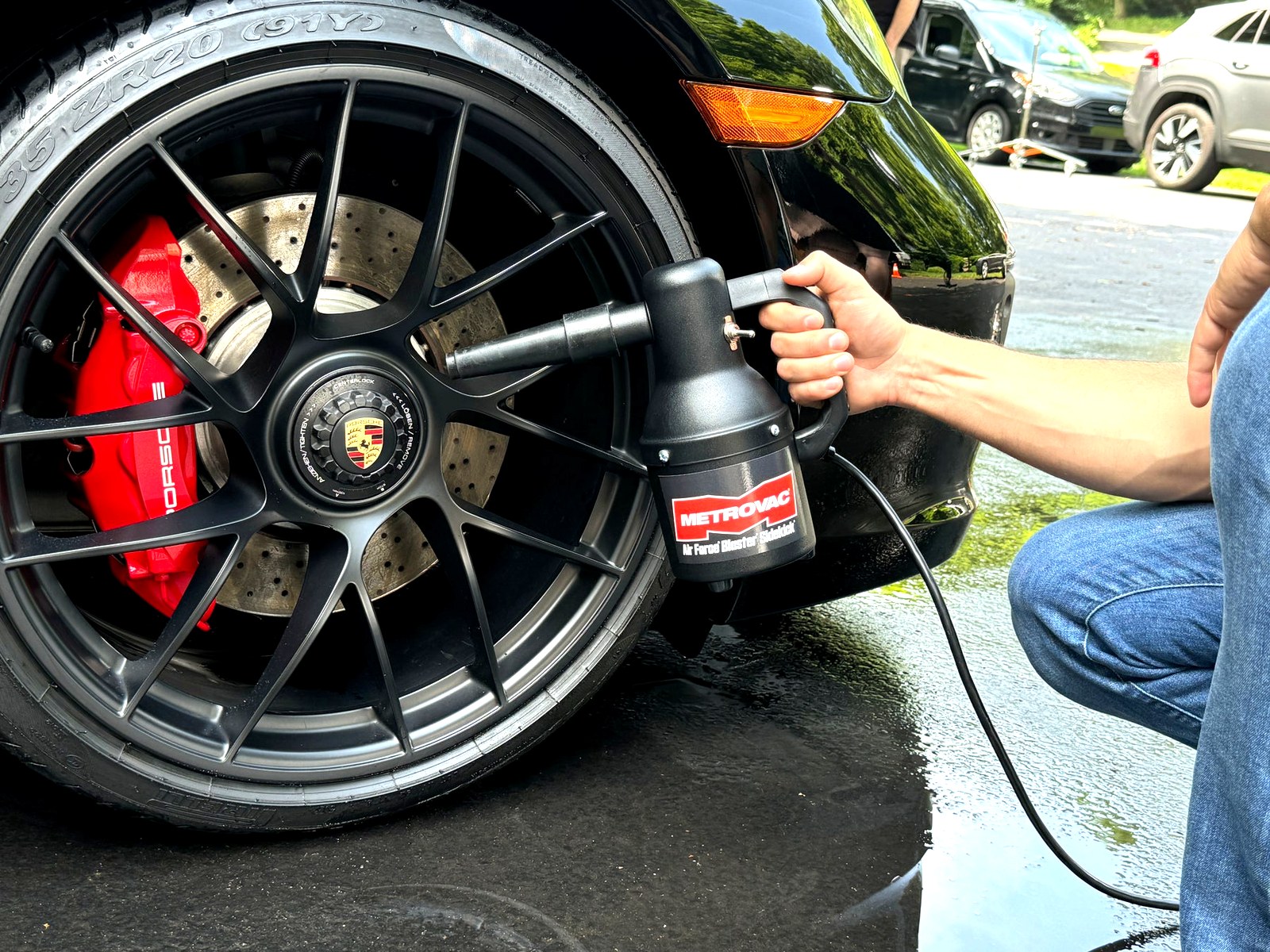
Hagerty found the Sidekick great "at getting water out of all the creases and seams where water hangs out after you dry a car." The reviewer also used it to dry tires before applying dressing. The detailer who reviewed the Master Blaster for Detailed Image said his shop kept four to six Sidekicks for mobile work and tight spots, and that they last "as they say, forever." The Sidekick carries MetroVac's One-Year Limited Warranty on the whole machine.
Price on our store: $201.29 (guest price on the product page, checked November 21, 2026).
The Vac N Blo VNB-94BD: the interior specialist that also blows
A supercar's cabin is a minefield of Alcantara, quilted leather, carbon trim and tight footwells, and none of it forgives a cheap shop vac. The MetroVac Vac N Blo VNB-94BD is MetroVac's compact answer: a vacuum and a blower in one all-steel canister.
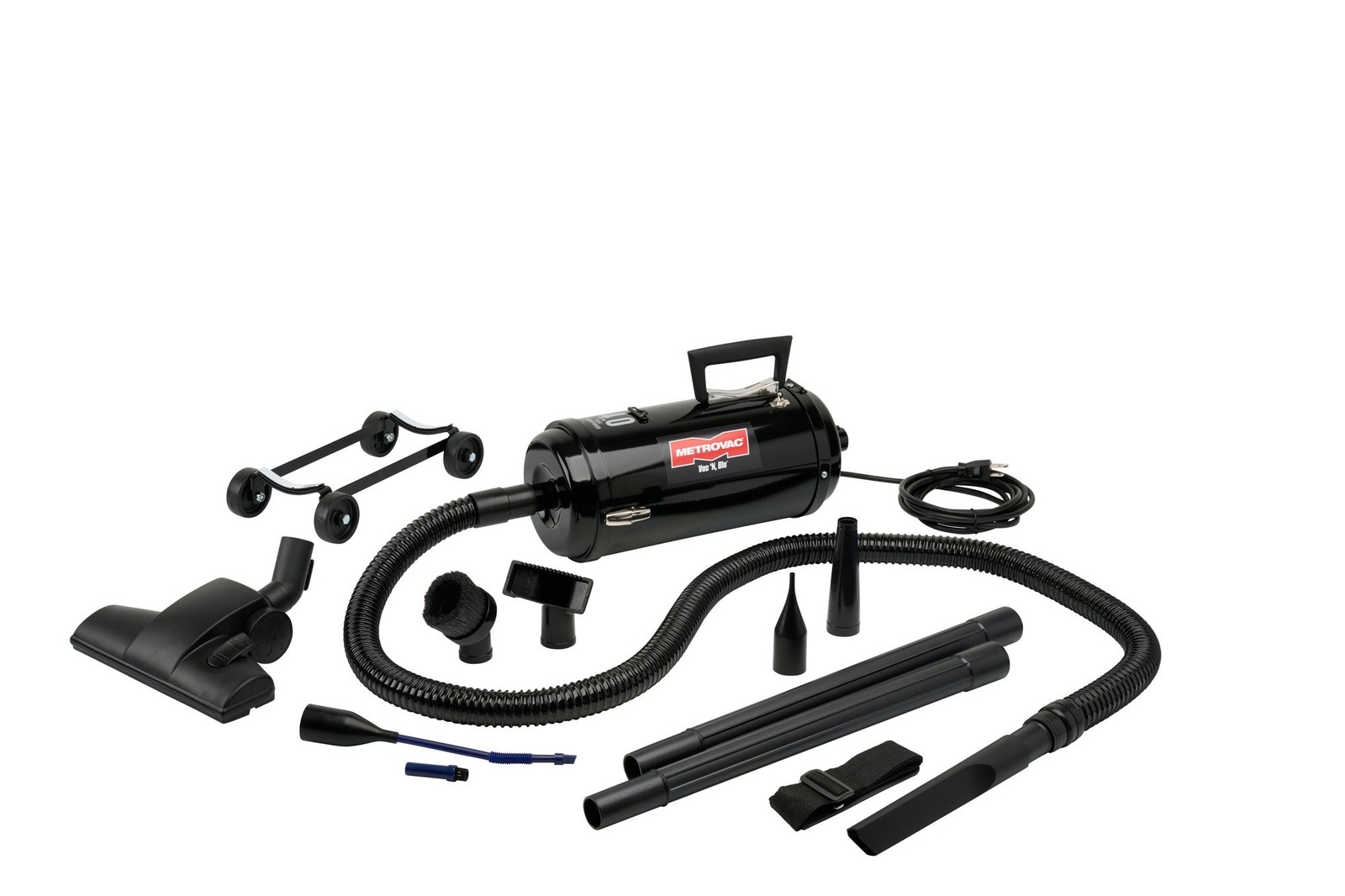
Our product page lists a commercial-quality 4.0 peak horsepower twin-fan motor with two speeds and 142 cubic feet per minute of airflow. The machine weighs 10 pounds and rolls on a four-wheel dolly. The VNB-94BD comes with a full detailing kit:
- an upholstery nozzle, a crevice tool and a dust brush
- two extension wands and a combo swivel floor brush
- micro tool kits for vents, seams and switchgear
- a blower nozzle and an inflator adapter
- a shoulder strap
That's a lot of reach for a machine that fits on a garage shelf.
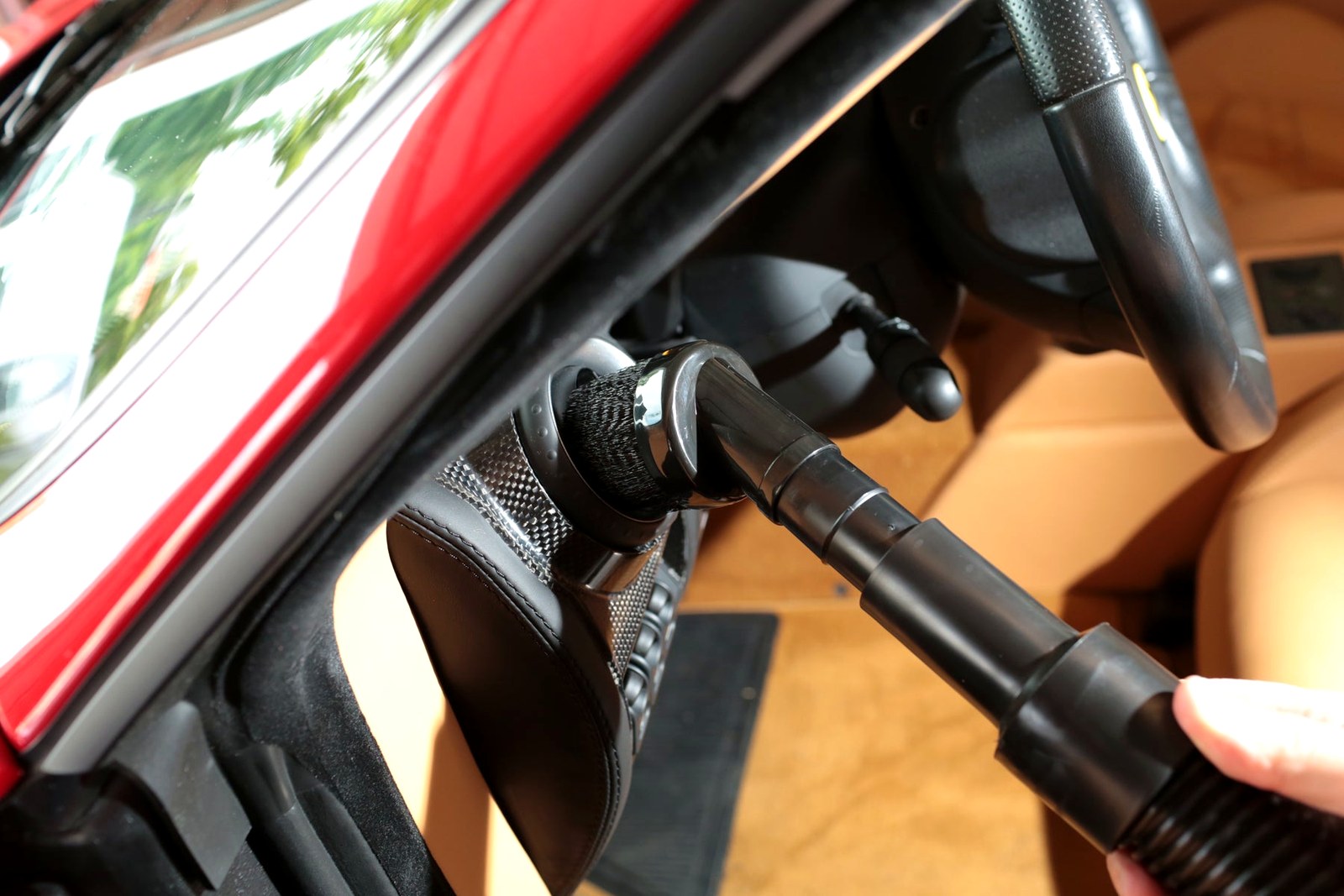
Swap the hose to the other port and the Vac N Blo becomes a blower. MetroVac's FAQ is refreshingly honest about what that means. The blower "will certainly clear water from door jambs, seams, and other hard to reach areas," but it isn't meant to dry the entire car: "You'd need the master blaster for that." So we see the Vac N Blo as the interior half of a two-machine setup, with the Master Blaster or Sidekick handling the outside. Hagerty, testing a compact Vac N Blo, praised the all-steel build and its "exceptional power and versatility in a quality compact product." The VNB-94BD carries the same five-year motor and one-year parts warranty as the Master Blaster.
Price on our store: $643.49 (guest price on the product page, checked November 21, 2026).
Which MetroVac fits your garage?
All three machines share MetroVac's steel construction, but each is built for a different job. The chart puts their published numbers side by side.
A quick way to choose:
- You wash at home and want to stop towel-drying: the Master Blaster is the one that dries a whole car.
- You already have a dryer, or you travel to shows and track days: the Sidekick handles mirrors, wheels and touch-ups and packs in a corner of the trunk, if your car has one.
- The cabin is your priority: the Vac N Blo cleans the interior and blows water out of jambs and seams after a wash.
- You want the full kit: pair the Master Blaster with the Vac N Blo.
A touchless drying routine for a garage queen
A garage queen is a car that spends more time under a cover than on the road. It may only see a wash a few times a season, but every one counts. Here's a routine that pulls together advice from MetroVac, XPEL and the pros quoted above.
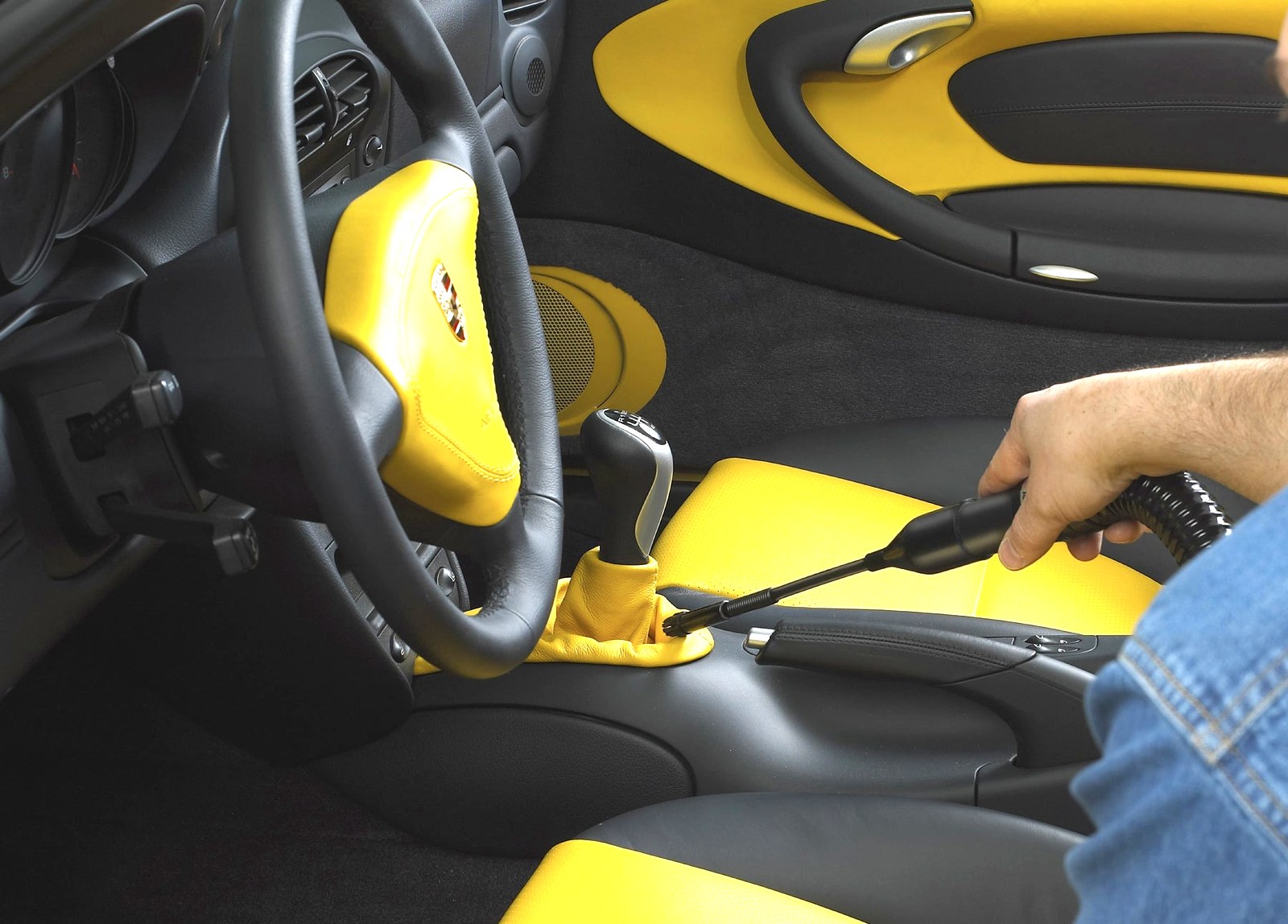
- Do the interior first. Vacuum the cabin with the Vac N Blo before you wash, so you don't track dust back onto clean paint. Use the dust brush on leather and trim and the micro tools around vents and switchgear.
- Wash in the shade, on cool panels. Sun and heat flash-dry water into spots no matter what dries it. The Detailed Image reviewer is blunt about it: in the sun, "no blower will dry a car fully before you get water spots."
- Blow out the hiding spots before the panels. Start with the mirrors, grille, badges, lights, fuel door and wheels, so their water doesn't run onto paint you've already dried. This is where the Sidekick shines.
- Work top-down, in sections. Dry the roof and glass first, then the hood and one side, then the other side. On a big car, the Detailed Image reviewer re-rinses the sections he hasn't reached yet so they don't dry on their own, then works through them in order.
- Sweep, don't stab, at film edges. Keep the air moving across PPF edges and panel gaps rather than holding a nozzle on one spot.
- Finish with the jambs. Open the doors, hood and trunk and blow out the jambs last.
- Treat the coating. If your coating or film maker recommends a topper, apply it once the car is completely dry. XPEL, for example, recommends applying its Ceramic Boost after each wash on its color PPF.
If you'd like a garage queen of your own to practice on, this Corsa Red 2007 Ferrari F430 Spider with a beige interior on Exotics Group was listed at $299,000 with 5,039 miles as of November 21, 2026. That's exactly the kind of car that deserves a touchless dry.
The bottom line
MetroVac has spent more than 80 years building vacuums and blowers the old-fashioned way: in steel, in America, by a family that still answers the phone about 40-year-old parts. For owners of cars with flawless paint, expensive film and fresh ceramic coatings, that pays off in a very practical way. You stop touching the paint to dry it. The Master Blaster dries the whole car, the Sidekick goes after the drips, and the Vac N Blo looks after the cabin. All three are built to outlast the car you buy them for, and maybe the next one too.
Related reading
Before you dry a protected finish, it helps to know what you're protecting. Wrapped, Not Stirred: The Science of Vinyl Wraps, PPF and Ceramic Coatings on Supercars explains how film thickness, coating chemistry and cure times work. And if your wheels are the hardest part of every wash, Getting a Grip: Hot Rubber, Slip Angles and the Magic Formula Behind Supercar Tires covers what's going on where the rubber meets the road.
Ready to stop towel-drying? Shop MetroVac dryers, blowers and vacuums in the Exotics Group store. They ship from MetroVac in New Jersey to U.S. addresses.
Sources
- MetroVac: About MetroVac
- MetroVac: Why Choose MetroVac?
- MetroVac: FAQ
- MetroVac: Warranty and Repair Request
- Hagerty Media, Matthew Fink: MetroVac, vacuums and dryers for professionals and car enthusiasts (May 9, 2023)
- NJBIZ, Meg Fry: MetroVac has been cleaning up in sales for 75 years (September 2, 2014)
- Detailed Image Ask a Pro: Product Review, Metro Vacuums Master Blaster Revolution
- XPEL: Product Care Instructions
- Exotics Group store: MetroVac Air Force Master Blaster MB-3CD
- Exotics Group store: MetroVac Air Force Blaster Sidekick SK-1
- Exotics Group store: MetroVac Vac N Blo VNB-94BD