 exoticsgroup.com
First-Time Supercar Buyer, Part 5: Buying Process and Pitfalls (Love Is Blind. Your Inspector Isn't.)


First-Time Supercar Buyer, Part 5
Or: trust the car, then verify the VIN
Buying your first exotic is like a first date with someone wildly attractive: your judgment is the first thing to leave the room. This part is about getting it back. Part 1 covered what these cars sell for, Part 2 covered what wears out, Part 3 covered what living with one is like, and Part 4 added up the full bill. Part 5 covers the deal itself: checking the car, the paperwork and the seller before money moves, and getting the car home.
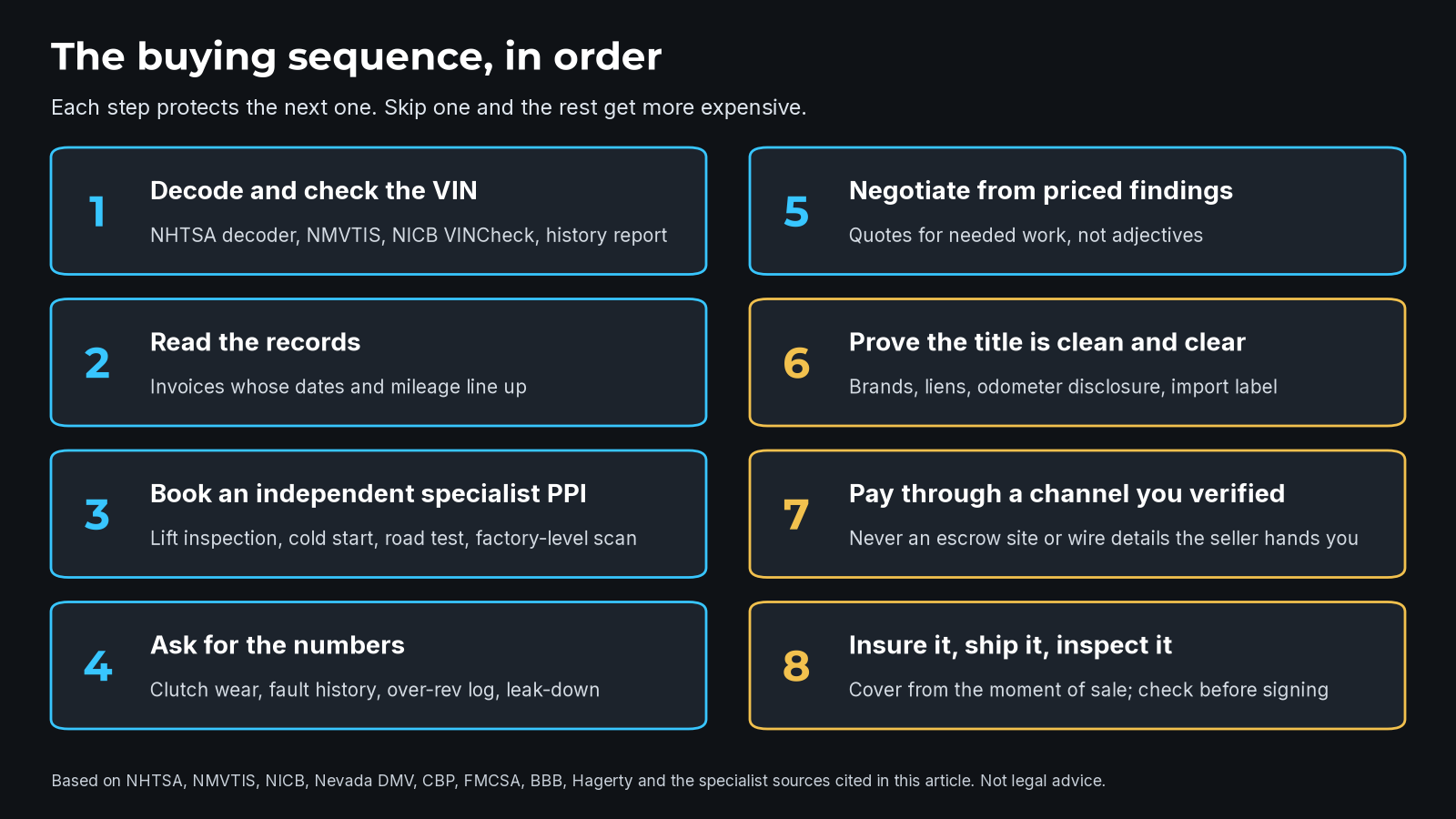
The short version: a used exotic is both a machine and a legal document. The machine gets a pre-purchase inspection. The document gets a title and history check. You need both. A perfect engine with a salvage brand on the title is still a problem, and a spotless title on a car with a worn-out clutch is still a bill. Every figure below comes from a named specialist, a government agency, a buyer's guide or, where marked, an owner report.
The beginner's version: six rules
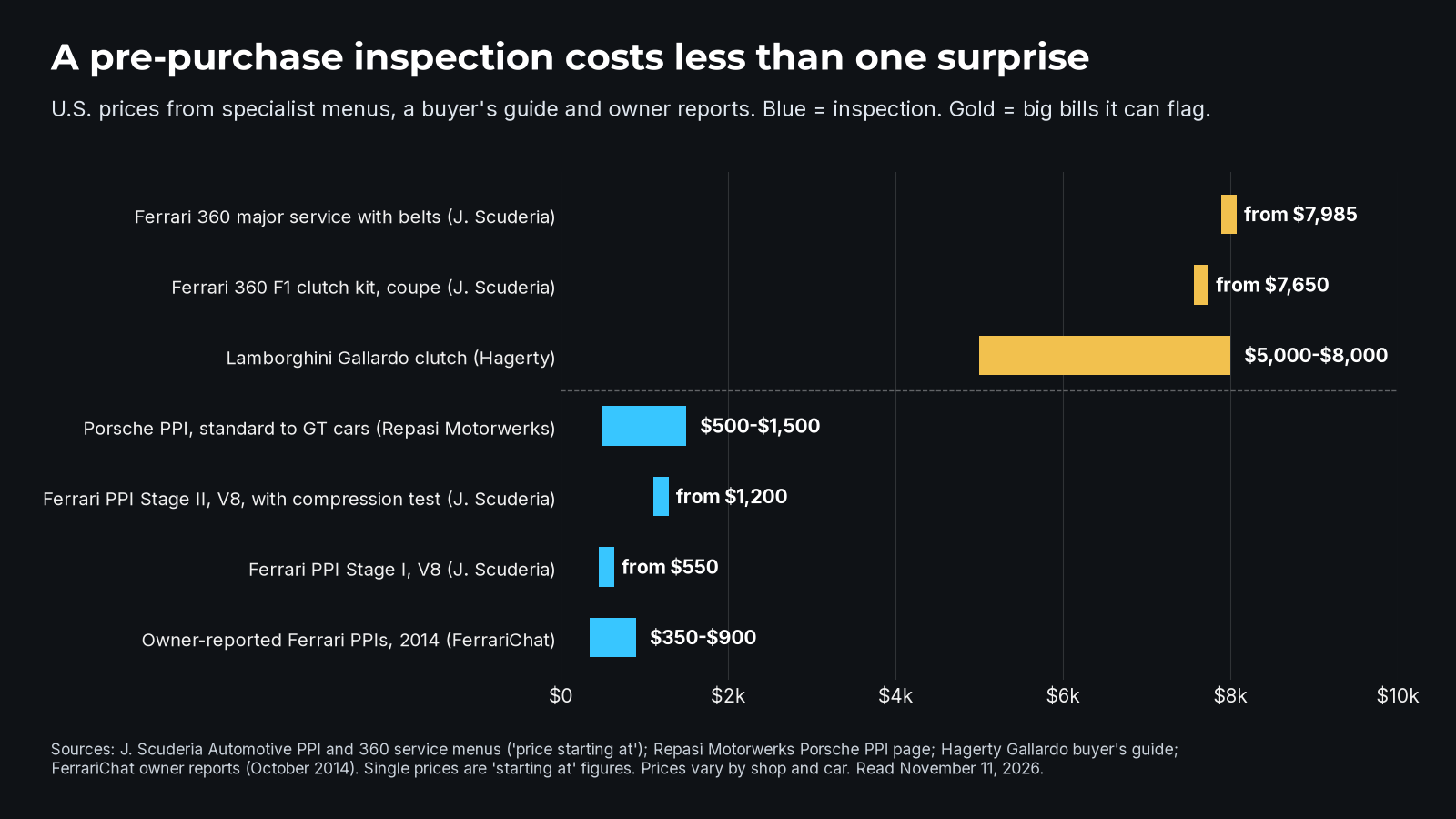
- Never skip the pre-purchase inspection (PPI). Published prices run from a few hundred dollars to about $1,500. One clutch costs more than that.
- Choose and pay the inspector yourself. It should be a specialist in that make, not someone the seller picked.
- Ask for numbers, not adjectives. Clutch wear, stored fault history, over-rev data where the car records it, and compression or leak-down results.
- Check the title as hard as the engine. Look for brands, liens, odometer problems and import status.
- Never pay through a link, escrow service or wire instructions the seller hands you.
- Insure the car from the moment it's yours, and inspect it on delivery before you sign anything.
The pre-purchase inspection
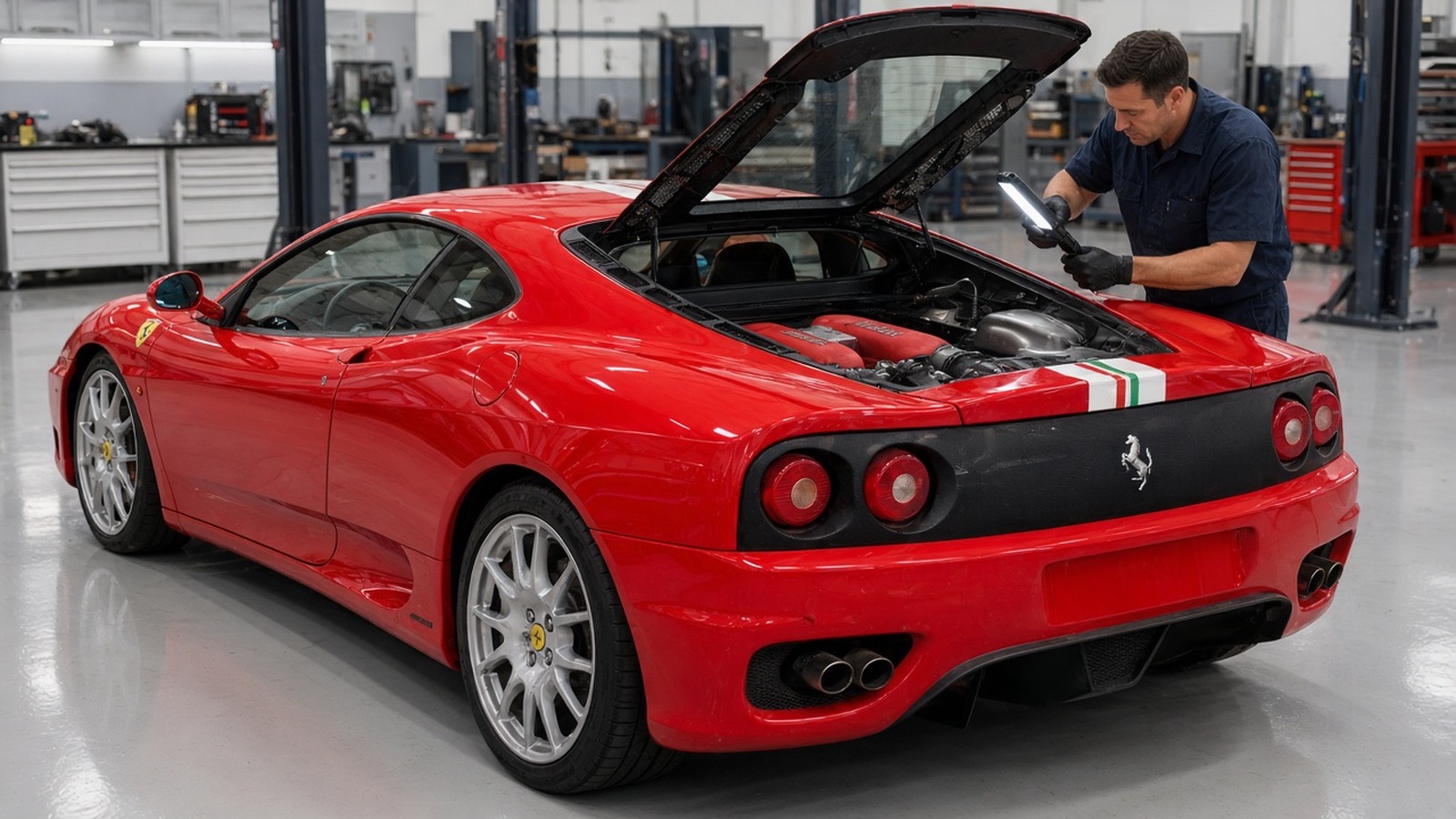
What it covers. Ferrari of Boca Raton, an official Ferrari dealer, describes a proper PPI as three parts: a physical inspection on a lift, a road test and factory-level diagnostics. Its advice is to ask the seller not to warm the car up before the inspector arrives, because cold-start behavior is part of the test. Its checklist includes compression or leak-down testing where the model and age call for it, and paint depth read panel by panel to find refinished areas. A generic OBD scanner, it notes, sees only a fraction of the faults a modern Ferrari stores, so ask for stored and intermittent fault history and a check of open recalls and campaigns against the VIN. Repasi Motorwerks' Porsche PPI similarly includes a factory PIWIS scan with full fault history, paint depth readings, a borescope look inside the cylinders and a written report.
Who should do it. A specialist in that make, chosen and paid by you. For private sales, Ferrari of Boca Raton, itself an official dealer, recommends an inspection at an official Ferrari dealer. Ed Bolian, a dealer writing about Gallardos in 2011, also recommends an authorized dealer. Independent marque specialists are the other common choice. My own rule: whoever you pick, it shouldn't be the shop that has maintained the car for the seller. You want a second opinion, not a reunion.
What it costs.
- J. Scuderia Automotive, a Ferrari specialist, lists a Stage I PPI from $550 for a V8 and from $725 for a V12. Stage II, which adds a compression test and borescope pictures, starts at $1,200 for a V8 and $1,400 for a V12.
- Repasi Motorwerks prices Porsche PPIs at about $500 to $800 for standard models and $800 to $1,500 for GT cars. Compression and leak-down tests cost extra.
- In a 2014 FerrariChat thread, owners reported paying $350 to $900. One paid $550 with a compression test and $350 without. Another paid $900 at a Ferrari dealer.
- Ferrari of Boca Raton prices by labor time and says to plan on a full day.
Compression versus leak-down. Hagerty explains that a compression test tells you whether any cylinder is low. A leak-down test pumps air into each cylinder and tells you why: air escaping past the rings into the crankcase, past an intake or exhaust valve, or through a cracked head or head gasket into the oil or coolant. The healthy result is boring: even numbers across all cylinders.
Ask the car what it remembers
Modern exotics keep a diary. Get the inspector to read it to you.
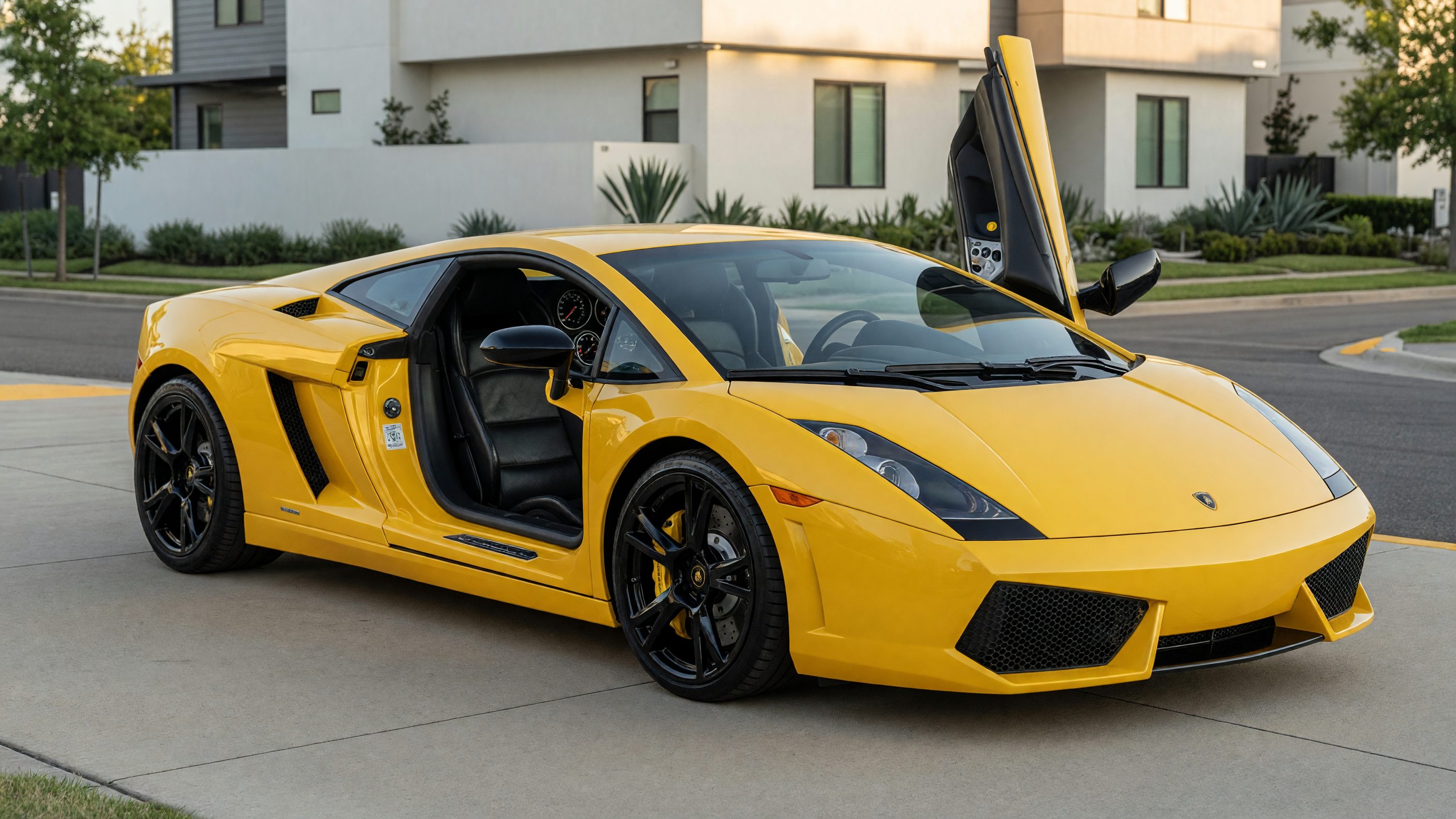
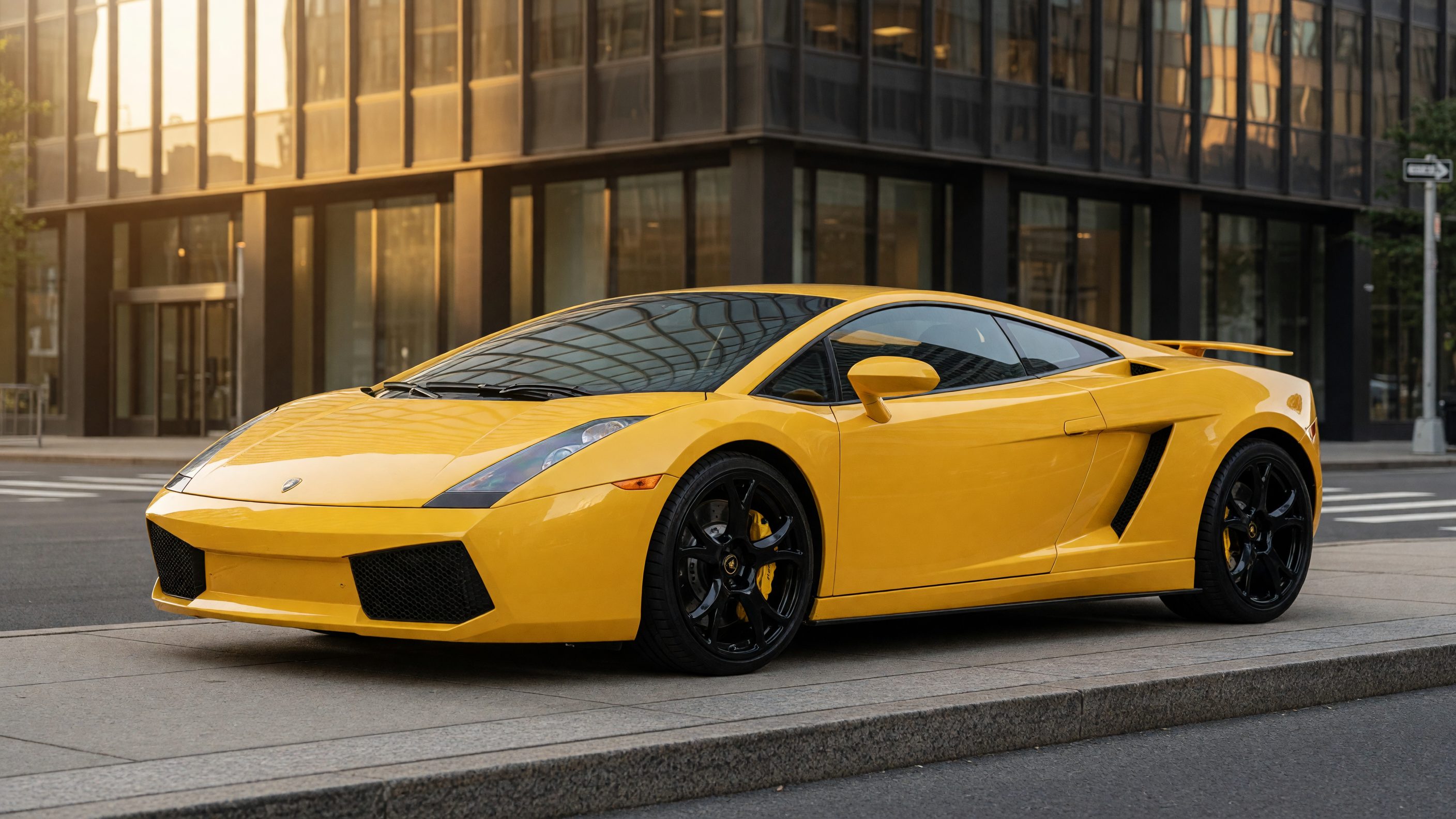
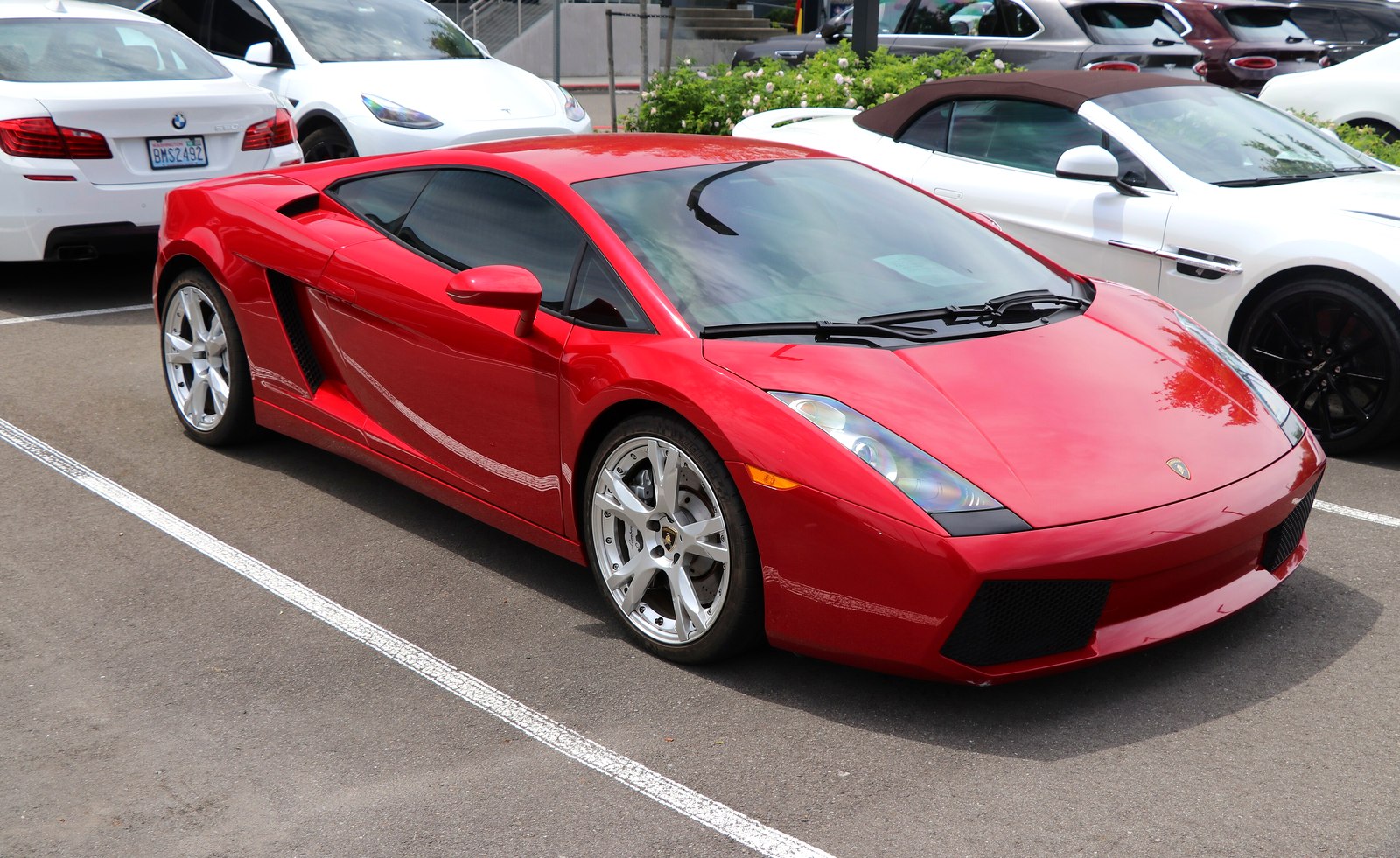
Clutch wear. Part 2 explained why the clutch number matters on single-clutch paddle-shift cars. Ferrari of Boca Raton says the gearbox computer on paddle-shift Ferraris reports clutch wear as a percentage, and that you should get that number in writing. For the Gallardo, Ed Bolian describes a LARA report from the e-gear system that shows the percentage of clutch left and whether the car has been launched or the transmission misused. Hagerty calls that clutch check a bargaining tool when a new clutch "with a bill for $5000-$8000" may be coming. On a car like this 2008 Gallardo coupe listed at $124,977, that report earns its keep.
Porsche over-revs. Porsche engine computers log how many times the engine has been taken into high-rpm ranges. According to Durametric, which makes Porsche diagnostic software, that data is available on the Boxster, 996, 997 and Cayman, but not on the 993, 964 or Cayenne. How many ranges a car records depends on the model. 911UK says the 996 generally uses two, the 997 and most 991s use six, and some later cars, including the 992 Turbo and the 4.0-liter 718s, use three. Go by the car's own report. In a Porsche Club of America tech answer about a GT4, expert Pedro Bonilla explains that Range 1 is generally the rev limiter doing its job, Range 2 and up are mechanical over-revs, and Ranges 4 through 6 are major. He adds that Porsche won't certify a car as pre-owned with Range 4 or higher. The 911UK guide explains the classic cause, the "money shift": a manual car dropped into too low a gear at speed, so the wheels drive the engine past its limit. PDK and Tiptronic gearboxes generally prevent it.
Three details matter:
- The counts are ignitions, not events. A six-cylinder engine fires three times per revolution, so 300 ignitions is roughly 100 revolutions, per 911UK.
- When matters. Compare the engine-hour stamp of the latest event with current hours to see whether it was recent.
- The report should belong to the car. 911UK wants the VIN, mileage and operating hours on it; a screenshot doesn't count. Durametric adds a check: miles divided by operating hours gives an average speed, and most cars land between 30 and 50 mph. Its example of 12,000 miles in 917 hours, about 13 mph, is worth questioning.
That's why a manual 2002 911 Turbo listed at $99,996 deserves the full readout.

Ferrari, Lamborghini and McLaren. Murkier. In a 2013 FerrariChat thread about the 458, one member wrote that over-rev blips are recorded and can be checked during a PPI; in a 2020 thread, a long-time owner said none of his Ferraris had an over-rev check "because they can't." I found no published over-rev table for these brands like Porsche's, so ask the inspector exactly what their tool reads on that model and year, in writing.
Read the paper trail
A thick folder of invoices is great. One whose invoices agree with each other is better. Red flags:
- Time gaps, not just mileage. Ferrari of Boca Raton points out that Ferrari service intervals are every 12 months or 12,500 miles, whichever comes first. A low-mileage car that sat for years can be badly overdue.
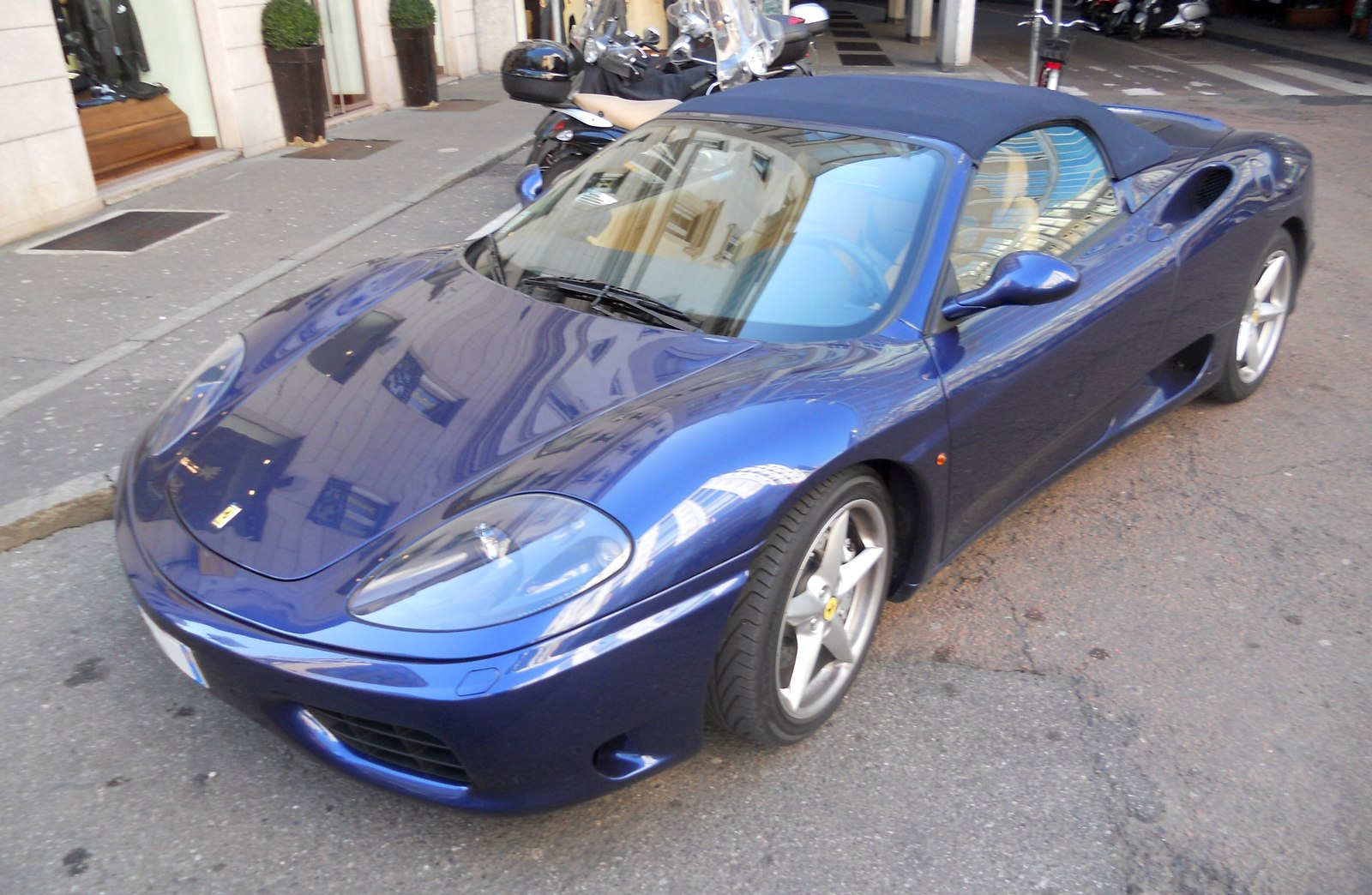
- Missing big-ticket work. On belt-driven cars like the 360, Ferrari of Boca Raton calls the last belt-service paperwork the headline finding. (The F430 that replaced it uses timing chains, as Part 2 explained.) J. Scuderia lists the 360 major service with belts from $7,985, so a missing invoice is a real number.
- Oil. Ed Bolian writes that Gallardos can burn about a liter of oil per 1,000 miles, so regular service records matter on those cars.
- Mileage that doesn't line up. NHTSA suggests comparing the odometer with the mileage on maintenance and inspection records. Exotics Group listing pages show mileage history, too. This 2003 360 Modena shows 17,838 miles in January 2024 and 18,996 in September 2026, a steady pattern. If a later reading is ever lower than an earlier one, ask why before you go further.
- A clean report isn't a clean bill of health. Ed Bolian puts it bluntly: "A clean CARFAX is by no means a guarantee that the car is clean, but a bad one is a pretty good indicator that something happened."
Ferrari of Boca Raton lists four reasons to walk away: undisclosed structural damage, evidence of flood exposure, mileage that doesn't match the records, and no verifiable service history.
Negotiate with a calculator, not a crush
Asking isn't selling. As Part 1 explained, listing prices are what sellers hope for. The "price vs. market" boxes on Exotics Group listing pages compare dealers' asking prices, not sale prices. Two examples as of November 11, 2026:
- This 2008 911 Turbo (997) dropped from $120,985 to $108,823, a cut of $12,162, and is still listed 4% above the median of 110 comparable listings.
- This 2003 360 Modena is $160,790 after a $30,000 cut, about 5% below the median of 37 comparable listings.
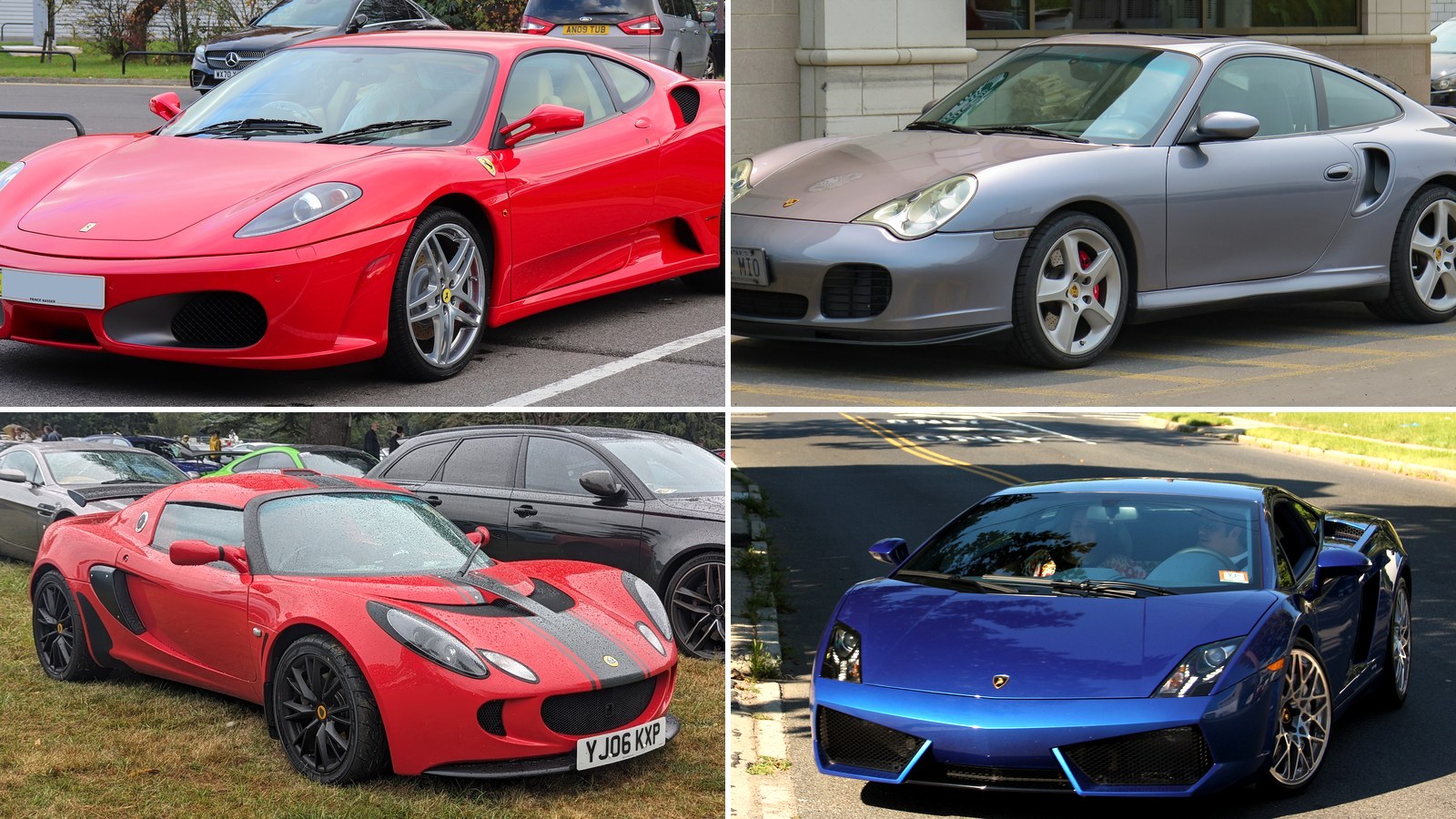
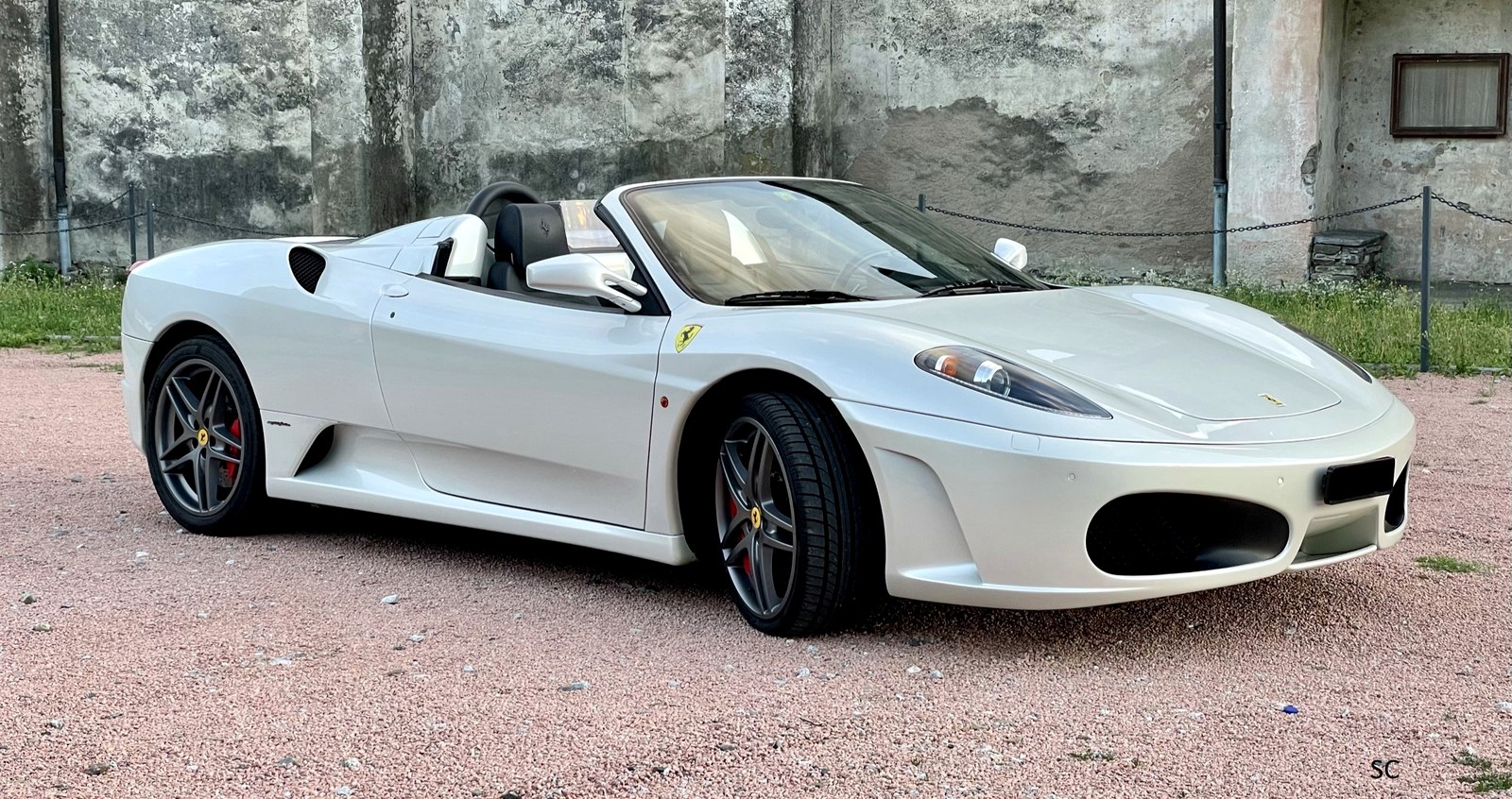
Treat outliers with suspicion. This 2006 F430 at $115,000 with 17,940 miles is priced so far below comparable listings that the page doesn't rate it and tells you to confirm the price with the dealer. Too cheap means more checking, not less.
Use the inspection as your script. Ferrari of Boca Raton advises getting each finding quoted, then negotiating from the actual cost or asking the seller to have the work done at an official dealer before delivery. Before the PPI results arrive, decide your walk-away number. It's easier to stick to a number set before you fell in love.
The title is part of the car
Salvage and rebuilt titles. Taking Nevada as the example, the state DMV treats a vehicle as a total loss when repairs would cost more than 65% of its fair market value, and it counts a car as flood damaged when water rose above the door sill and got into the cabin, trunk or engine bay, or reached the electrical system. Its advice is plain: never buy a car with an orange salvage title, because it's illegal to sell one to a private individual until it has been rebuilt and inspected. Once repaired and inspected, the car is titled as Rebuilt. Rules differ by state; the NMVTIS consumer page describes flooded cars after Hurricane Katrina being moved to states that don't brand flood vehicles.
Run the free and cheap checks.
- NMVTIS, the federal title database, shows title and brand history, the latest odometer reading and insurer total-loss reports, though it warns that a report can miss data not yet reported.
- NICB VINCheck is free and shows theft and salvage records from participating insurers. It allows five searches a day and isn't a complete history report.
- NHTSA's VIN decoder confirms the VIN matches the make, model and year in the ad.
- Exotics Group listing pages show the VIN up front, with links to Carfax and carVertical reports. Even a 2006 Lotus Elise at $58,216 gets the full routine: its VIN check costs the same as a Ferrari's.
Match the VIN to the car. Florida's motor vehicle agency tells private buyers that the VIN on the title must match the vehicle and that etched VINs on the windows should match too. Durametric suggests Porsche buyers compare the VIN and color codes with the sticker under the hood. NMVTIS describes a South Florida ring that put VINs from legitimate cars onto stolen cars of the same make, model and year.
Liens. If a loan is open, the Nevada DMV says the lienholder orders the printed title after payoff or signs a lien release; Florida gives lienholders 10 days to file a satisfaction. Get the payoff amount from the lender and don't hand over the balance until the release is lined up.
Odometer. NHTSA estimates that more than 450,000 vehicles are sold each year with false odometer readings, and that digital odometers make tampering harder to spot. Since January 1, 2021, federal odometer disclosure is required for model year 2011 and newer vehicles for 20 years. Model year 2010 and older are exempt. So this 2015 911 Turbo (991) needs a disclosure at sale, while the 2002, 2003, 2006 and 2008 cars above don't. On those, NHTSA suggests comparing the title mileage with the odometer and service records and looking at wear on the pedals.
Gray-market imports. U.S. Customs and Border Protection says cars under 25 years old generally have to meet U.S. safety standards. A car without the manufacturer's label certifying that it meets those standards has to come in as a nonconforming vehicle: the importer must contract with a DOT-registered importer to modify and certify it, and post a DOT bond of 1.5 times the car's dutiable value. EPA rules apply too. If a younger car lacks that label, ask for the import paperwork before going further.

Paying without getting robbed
The Better Business Bureau's 2020 study of vehicle escrow scams describes the pattern: a very low price, a sad story (deployment, divorce, a death in the family), a reason you can't see the car in person, and instructions to pay a supposedly independent escrow or shipping company, often by wire. Some fake escrow sites borrow real businesses' names. The FBI's Internet Crime Complaint Center has received tens of thousands of these reports, with losses in the tens of millions.
My rules:
- You choose the payment or escrow channel, not a link from the seller.
- Verify the seller. In Florida's private-sale guidance, the seller's ID should match the name on the title.
- Don't pay for a car nobody you trust has seen.
- Confirm wire instructions by phone, using a number you found independently.
- Release the final money only when the signed title, or a lien payoff and release, is in place.
If something goes wrong, BBB says to report it to BBB Scam Tracker, the FTC (ReportFraud.ftc.gov) and the FBI's IC3 (ic3.gov).
Getting it home in one piece
Insure it at the moment of sale. Hagerty's shipping guide notes that the seller's insurance ends when the car is sold, and the transporter's liability doesn't start until the car is loaded, which can be days later. Get agreed-value coverage that starts when money and title change hands. Part 3 explained agreed-value coverage, and Part 4 covered what insurance typically costs.
Go enclosed, and read the bill of lading. Hagerty says enclosed transport should be the only choice for a high-value car, ideally one with a lift gate. The bill of lading governs any claim, and the carrier is liable only for its own negligence, so never sign a damage waiver. Hagerty's guide suggested looking for at least $100,000 of liability per vehicle for enclosed transport. That guide dates from 2007, so check that the limit covers what your car is worth today.
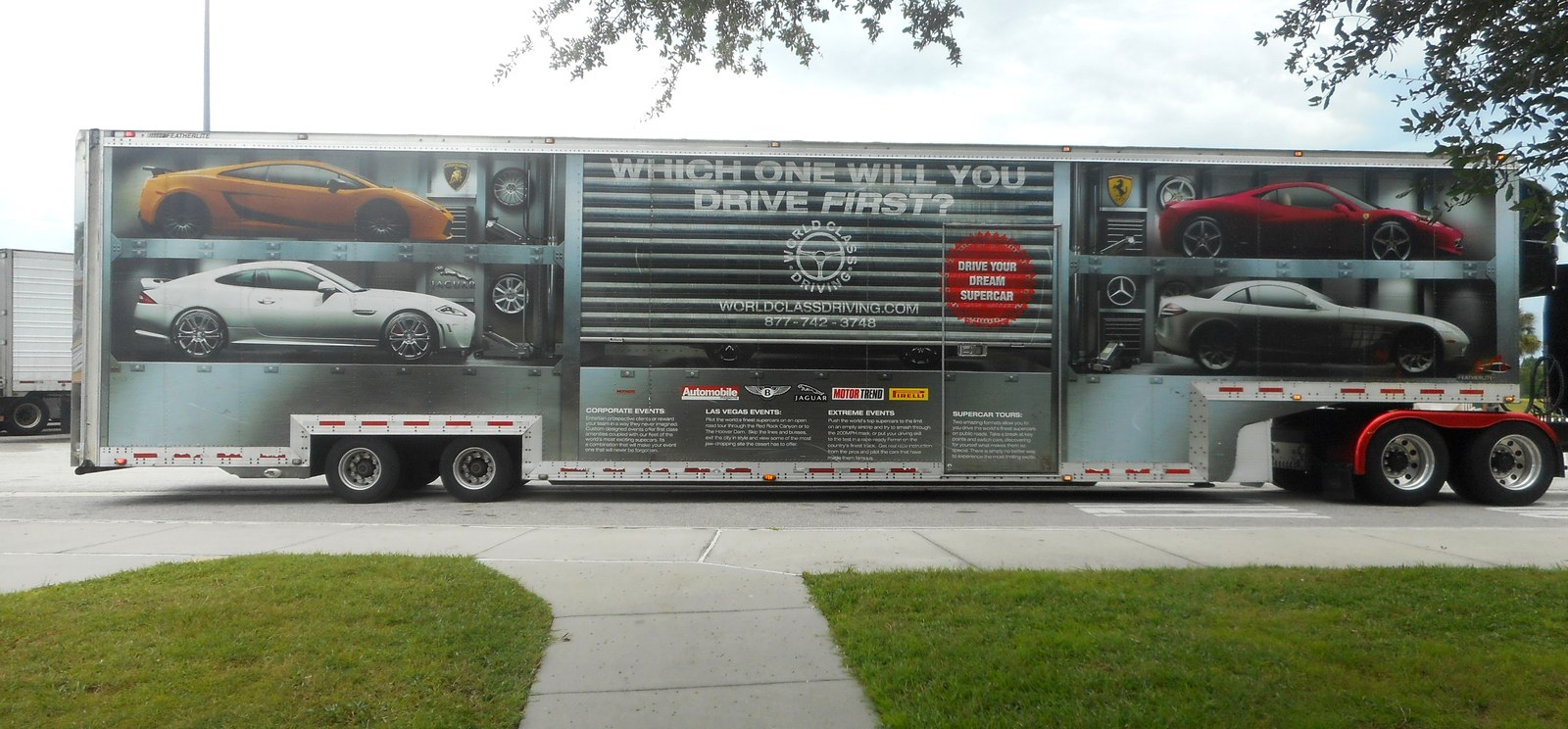
Check who you're hiring. The FMCSA, the federal trucking regulator, explains that brokers arrange shipments while carriers actually haul them. Both need federal authority for interstate work, and both have an MC number. Carriers also have a USDOT number. Look them up in FMCSA's free SAFER company snapshot, and avoid companies that don't display an MC number.
Budget for it. Citadel Auto Transport, a referral site that passes shipments to licensed brokers and carriers (it says it holds no motor carrier authority itself), publishes 2026 enclosed rates for exotics of $3.40 to $5.50 per mile for trips under 500 miles, $2.10 to $3.80 for 500 to 1,500 miles, and $1.85 to $3.20 beyond that. An ASAP pickup within 48 hours adds 20% to 25%, and single-car enclosed costs 50% to 80% more than a shared enclosed trailer. By my arithmetic, a 1,000-mile trip at its 500-to-1,500-mile rates works out to about $2,100 to $3,800 before any surcharges.
Inspect on delivery, before you sign. Hagerty's advice is to inspect in good light and to note any damage on the paperwork before you sign. My addition: bring your PPI photos for comparison, and check that the VIN on the car matches the title in your hand.
Key takeaways
- A PPI from a specialist you choose costs far less than the repairs it can catch.
- Get clutch wear, fault history and, on Porsches, over-rev data in writing and tied to the VIN.
- Records should agree with each other and with the odometer, by date as well as by mileage.
- Run NMVTIS, NICB and a VIN decode, check for liens, and match the VIN on the car to the title.
- Pay only through channels you verified yourself, insure the car from the moment of sale, and inspect it before you sign for delivery.
Related reading
- First-Time Supercar Buyer, Part 1: The Market Landscape for First-Time Buyers by Sophia Chen
- First-Time Supercar Buyer, Part 2: Technical Realities and Reliability by Alex Rivera
- First-Time Supercar Buyer, Part 3: The Ownership Experience by Marco Bianchi
- First-Time Supercar Buyer, Part 4: The True Cost of Ownership by Sophia Chen
How this was put together: listing prices, histories and VINs were read from Exotics Group listing pages on November 11, 2026. The listed cars are offered by independent dealers, not by Exotics Group. Specialist prices are the "from" prices or ranges those shops published as of November 11, 2026. Nevada and Florida rules are examples, and other states differ. This article is general information, not legal or financial advice.
Header photo: Lamborghini Gallardo Spyder. Photo: Jebulon, CC0, via Wikimedia Commons.
Tags: #LasVegas #FirstTimeSupercarBuyer #PrePurchaseInspection #VINCheck #Ferrari360 #FerrariF430 #LamborghiniGallardo #Porsche911Turbo #Lotus
Sources
- J. Scuderia Automotive, Ferrari and Lamborghini Pre-Purchase Inspection
- J. Scuderia Automotive, Ferrari 360 Service Menu
- Sports Car Market, Ferrari 360 buyer's guide
- Repasi Motorwerks, Porsche Pre-Purchase Inspection
- Ferrari of Boca Raton, Ferrari Pre-Purchase Inspection (August 19, 2026)
- FerrariChat, Pre-purchased inspection cost (2014, owner reports)
- FerrariChat, Hitting the rev limiter (2013, owner reports)
- FerrariChat, Overrevs (2020, owner reports)
- Hagerty, Solving compression problems with a leakdown tester
- Hagerty, Your handy 2004-13 Lamborghini Gallardo buyer's guide
- Ed Bolian, Lamborghini Gallardo Pre-Purchase Inspection (PPI) Checklist (2011)
- Durametric, Reading Porsche Over-Revs
- Porsche Club of America, Interpreting DME information on a tuned GT4 track car
- 911UK, Porsche over-rev ignition range guide
- NHTSA, Odometer Fraud
- NHTSA, Consumer Alert: Changes to Odometer Disclosure Requirements
- NHTSA, VIN Decoder
- NMVTIS, Consumer Access
- NICB, VINCheck
- Nevada DMV, Salvage Vehicles
- Nevada DMV, Titles
- Florida Highway Safety and Motor Vehicles, Buying a Vehicle in a Private Sale
- U.S. Customs and Border Protection, Importing a Motor Vehicle
- Better Business Bureau, BBB Investigation: Vehicle Escrow Scams (2020)
- Hagerty, Domestic Shipping guide (PDF, 2007)
- FMCSA, Consumer Advisory: Automobile Transporters
- FMCSA, SAFER Company Snapshot
- Citadel Auto Transport, Enclosed auto transport cost (2026)