 exoticsgroup.com
First-Time Supercar Buyer, Part 2: Technical Realities and Reliability

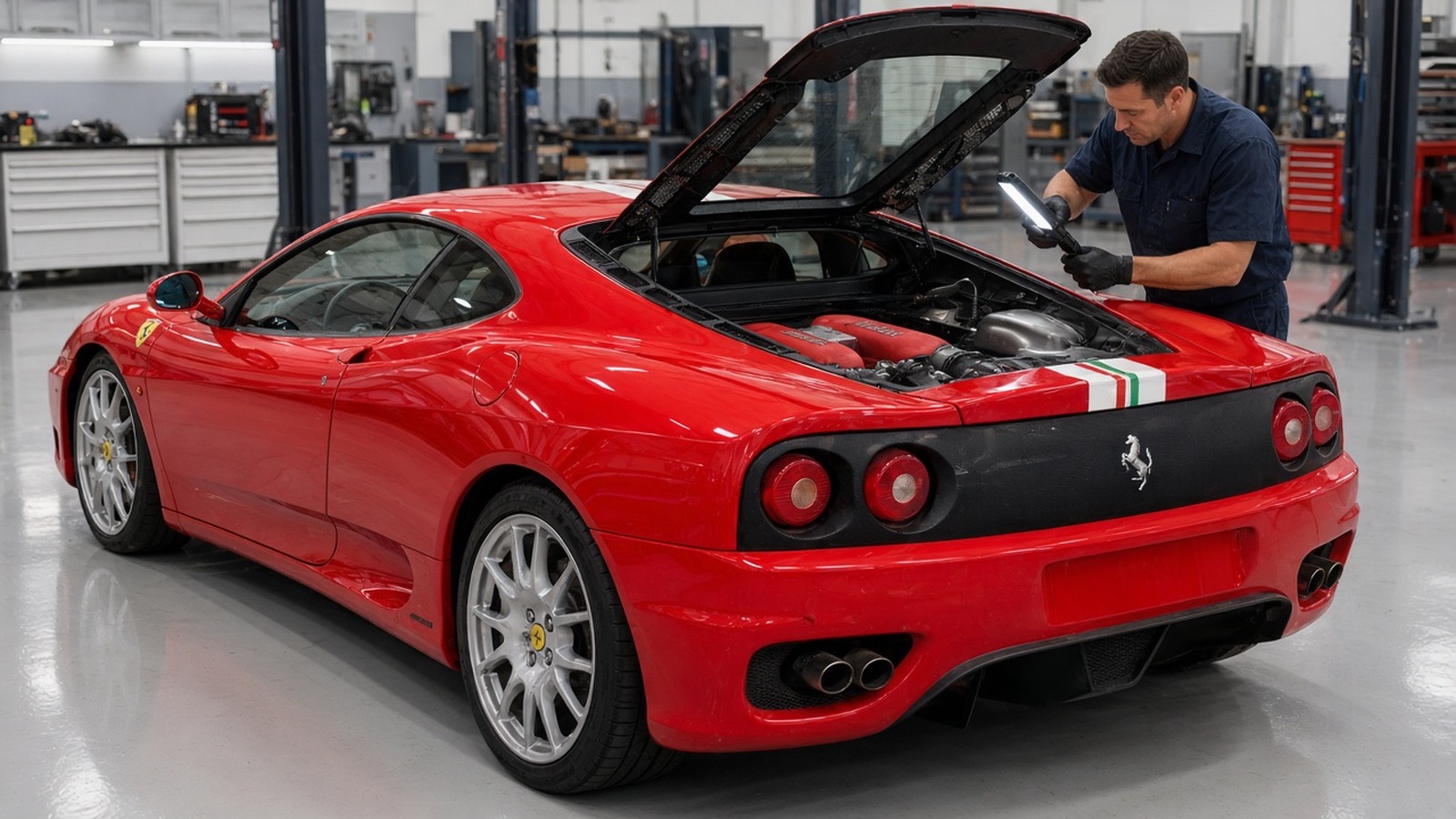
First-Time Supercar Buyer, Part 2
Or: how I learned to stop worrying and read the clutch wear number
In Part 1 of this series, Sophia Chen mapped what an entry-level exotic costs to buy in late 2026. This is the other half of the deal: what it costs to keep one. The good news first. None of the cars covered here is a ticking time bomb. Each has a short, well-documented list of things that wear out or fail, and specialists and owners' clubs have spent two decades writing that list down. If you know it before you buy, a "scary" exotic becomes a car with a predictable maintenance budget.
This guide covers the Lotus Elise and Exige, Ferrari 360 and F430, Lamborghini Gallardo and the 996 and 997 Porsche 911 Turbo, with a few newer cars for contrast. Every cost and interval below comes from a named specialist, marque club, buyer's guide, manufacturer page or, where marked, an owner report. Prices are what those sources published. Treat them as ranges.
The beginner's version: five things to know
- Mileage is a poor guide to clutch health on automated manuals. A single-clutch F1 or e-gear car driven in traffic can wear a clutch faster than one driven hard on open roads. The clutch has to be measured with diagnostic equipment (Sports Car Market; Performance Car Intelligence).
- Each car has one signature item. For the 360 it's timing belts. For the F430, exhaust manifolds. For the Gallardo, the clutch. For the 911 Turbo, bonded coolant pipes. For the Elise and Exige, two small lift bolts in the Toyota engine. More on each below.
- Service history counts for more than low miles. Specialists say a well-serviced, higher-mileage car is often a safer buy than a low-mileage car that has been neglected (Sports Vehicle Performance).
- Pay for a specialist pre-purchase inspection. Every buyer's guide cited here recommends one (Octane Files; Hagerty).
- Known issues are negotiating points. An unread clutch or an unfixed coolant pipe is a cost you can put a number on, and that number can come off the price.
Automated manuals: how clutch wear is actually measured
The Ferrari F1 gearbox and Lamborghini's e-gear are not automatics in the traditional sense, and they are not dual-clutch gearboxes either. Each is a conventional manual gearbox with a single dry clutch, operated by a hydraulic pump and actuators instead of your left foot (Ferrari Owners' Club UK; Performance Car Intelligence). If you want the difference explained properly, our dual-clutch explainer walks through it.
Because the computer, not your foot, slips the clutch when you pull away, creeping in traffic and reversing slowly up an incline wear it fastest. Reverse is especially hard on it (Sports Car Market).
How the reading works on a Ferrari. On the F430, the transmission control unit can be read to show how worn the clutch is (Ferrari Owners' Club UK). The result is usually given as a percentage of wear, and owners on FerrariChat report a few practical rules. Treat these as owner reports, not factory guidance:
- Most clutches are ready for replacement at about 75 to 80% wear, if the reading is accurate.
- The reading is an estimate. Transmission temperature, the technician and the diagnostic computer can all change the number, so the most reliable readings come from the same shop and equipment that installed the clutch.
- The usual early warning is the car dropping into neutral on a normal shift request. Once the clutch slips, it should be replaced promptly to protect the flywheel and pressure plate.
The takeaway for a buyer: ask for a dated printout of the clutch reading from a recognized Ferrari specialist, and ask whether it shows wear or remaining life.
How long does it last? Hagerty says a 360 clutch can last up to 30,000 miles, in either the manual or the F1 car (Hagerty UK). On the F1 360, one specialist's published price for a clutch kit with labor starts at $7,650 for a coupe and $8,185 for a Spider (J. Scuderia Automotive). One FerrariChat owner reported a 2020s quote of $11,600 for the clutch on an F1 360 (FerrariChat owner report).
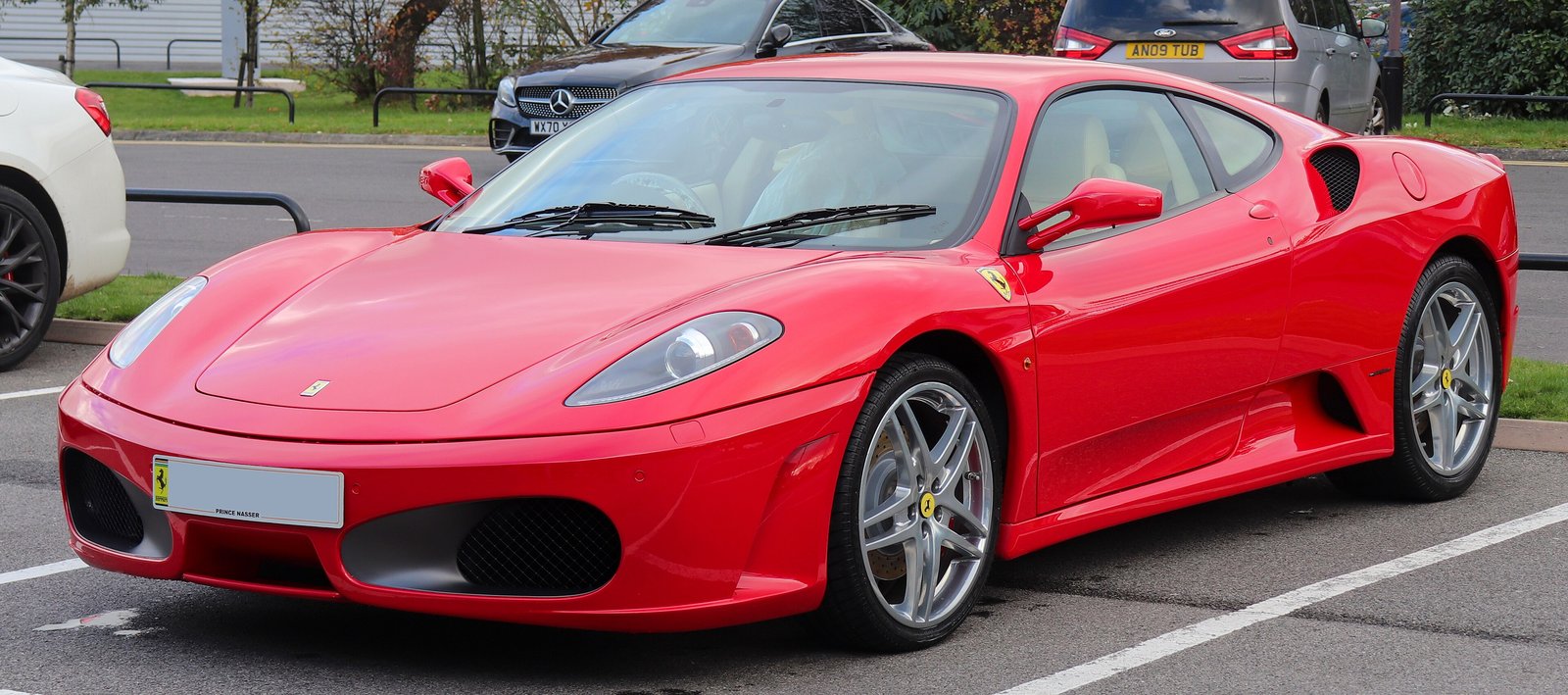
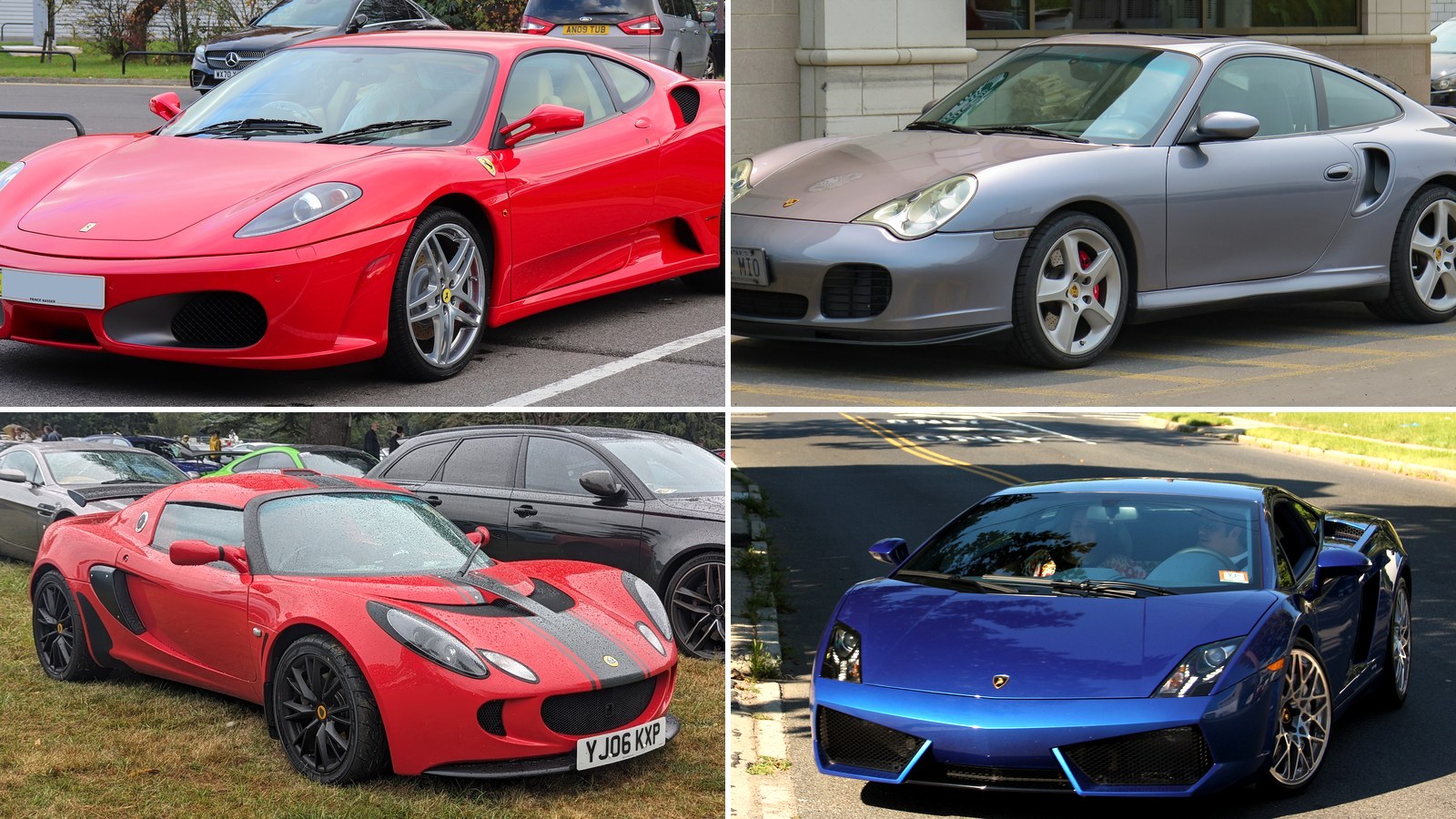
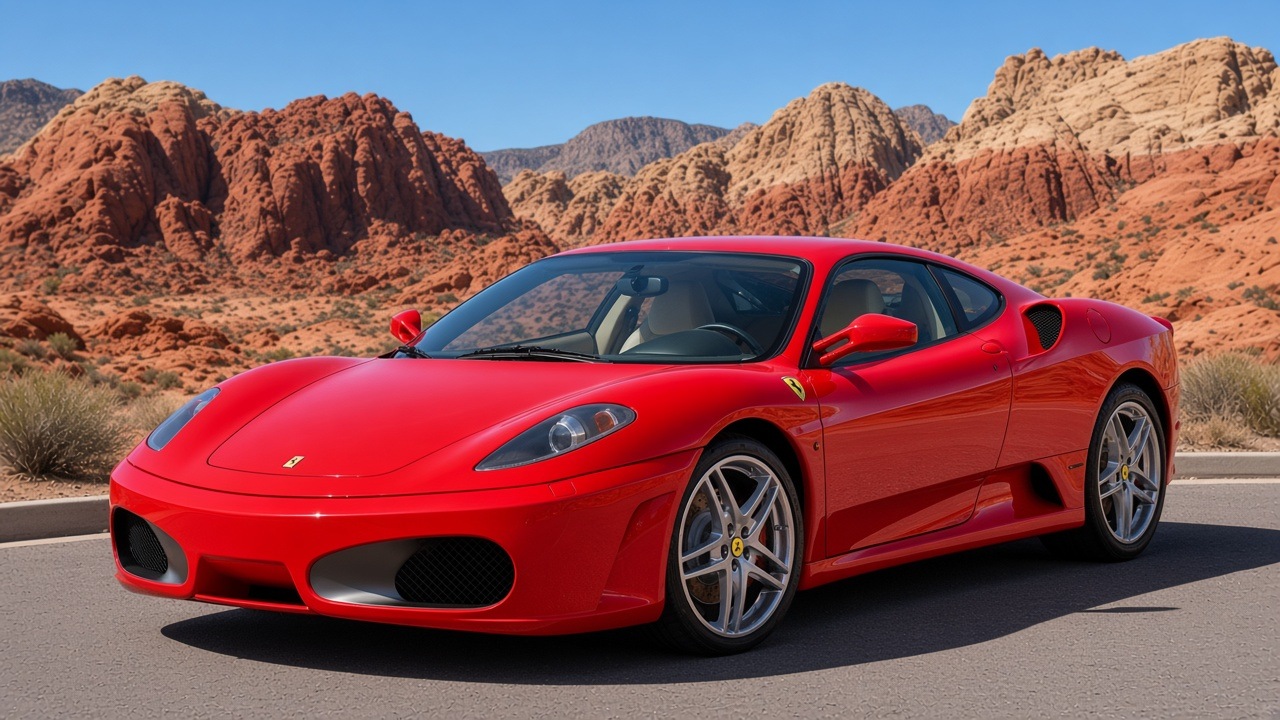
2007 Ferrari F430 F1. Photo: Vauxford, CC BY-SA 4.0, via Wikimedia Commons.
Ferrari 360: timing belts and the major service
The 360's V8 drives its camshafts with rubber timing belts, which makes belt replacement a key scheduled job. The later F430 uses chains (Sports Car Market). The good news is access. Unlike the F355 before it, the 360's belts can be reached through a panel behind the seats, so the engine does not have to come out. That saves a lot of labor and makes it less likely that a previous owner skipped the job (Hagerty UK).
Intervals. Hagerty UK says to plan on new belts every three to five years depending on use, with an oil change every 6,000 miles or once a year on low-mileage cars (Hagerty UK). Specialists' menus vary too. J. Scuderia, for example, prices its belt service as a five-year major (J. Scuderia Automotive).
Costs. A major service with belts and tensioner bearings is listed from $7,985 at J. Scuderia, whose package also includes coolant, plugs, filters and transmission fluid. A FerrariChat owner reported paying just under $5,400 for a major around five years earlier, then being quoted $11,325 for a "literally everything" major that included fixing oil leaks and an A/C service (FerrariChat owner report). That spread is the point. Always ask what a "major" includes.
Other 360 items to check: on cars built up to 2001, failing camshaft variators, which should have been replaced by now (check the records); F1 hydraulic actuators that fail with age; and cracked exhaust manifolds (Hagerty UK).
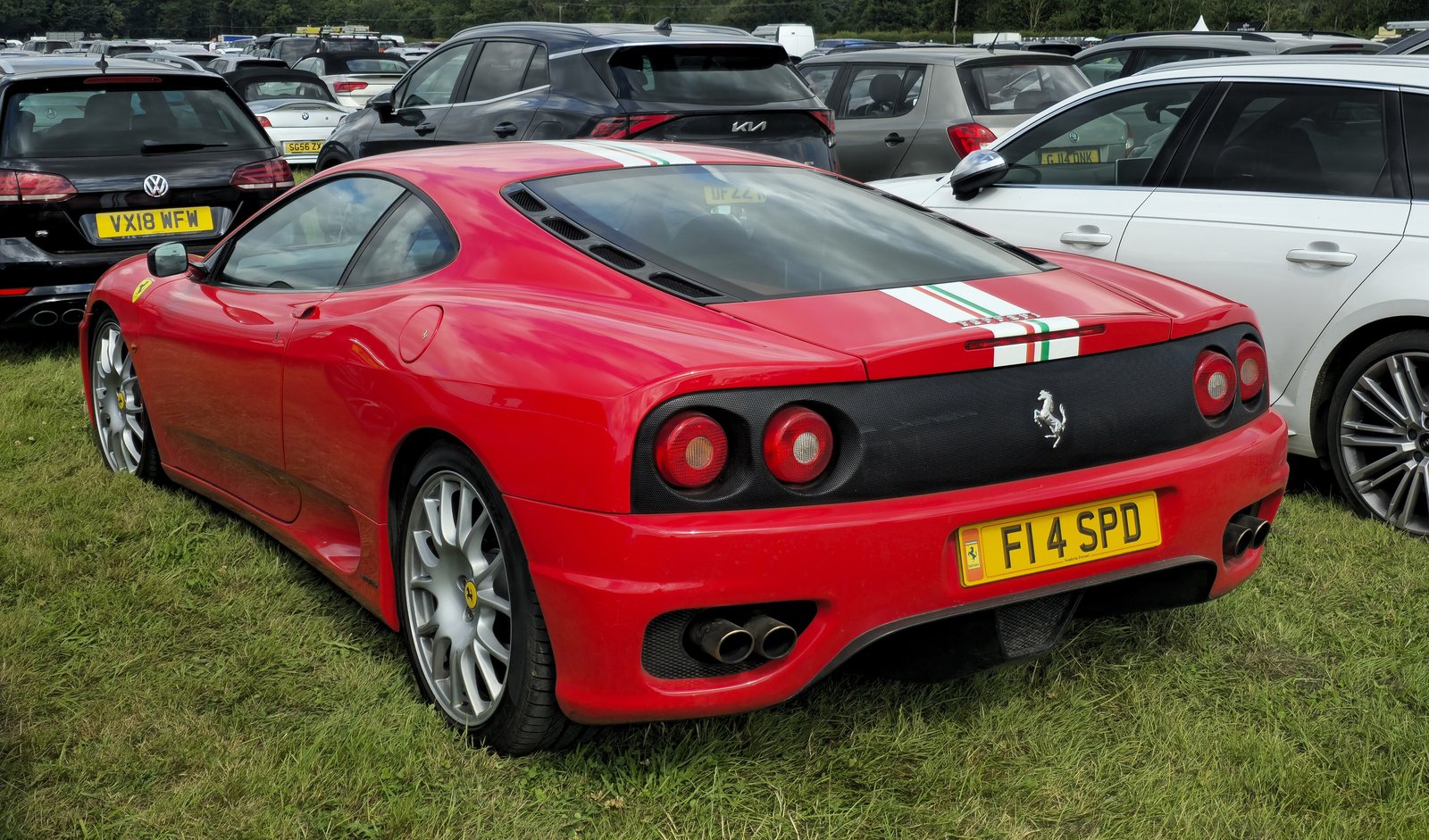
2000 Ferrari 360 Modena. Photo: Calreyn88, CC BY-SA 4.0, via Wikimedia Commons.
Ferrari F430: exhaust manifolds
The F430 has no belts to change, but it does have one famous weak spot. Its exhaust manifolds crack, and specialists say this affects most cars at some stage, the early ones most of all (Octane Files; Magneto). Ferrari revised the part, and many early cars got the later manifold under warranty. The later part is stronger but can still fail (Ferrari Owners' Club UK).
Why it matters: each manifold has a small catalytic converter, called a pre-cat, built in. If a cracked manifold is left alone, the pre-cat can break up and its ceramic fragments can be drawn into the engine (Ferrari Owners' Club UK). The usual warning sign is a ticking from the engine bay when the engine is cold that fades as it warms up and the metal expands to close the crack.
Fix options and prices (UK specialists):
- A used set of manifolds is about £1,700, and a new set about £7,000 (Ferrari Owners' Club UK).
- One specialist quotes £6,000 to £8,000 per side, fitted, for OEM manifolds and £3,000 to £5,000 plus fitting for aftermarket headers, with roughly 10 to 12 hours of labor for both sides (BAF Motorsport).
- Weld repair can work if the metal and the pre-cat are still sound (Maseratinet).
The F430's first-gen F1 pump is also worth a listen. Early pumps are silver and later, more durable ones are black. When you open the driver's door, the pump should run for about four or five seconds. Much longer can point to a tired pump or relay (Ferrari Owners' Club UK). Octane Files suggests an annual service at no more than 6,250 miles (Octane Files).
Sticky switchgear: the Ferrari quirk nobody warns you about
Many Ferraris of this era used a soft-touch rubberized coating on buttons, vents and trim. Over time it turns tacky. It's cosmetic, not mechanical, but a sticky cabin makes a car feel neglected. Specialist refinishers strip and recoat the original parts. Sticky No More's published F430 price list, for example, shows $90 per button, $100 per switch, $250 for the manettino, $250 for the F1 paddles and $400 for the HVAC panel (Sticky No More). The price of a full cabin depends on how many parts you send, so count them before you negotiate.
Lamborghini Gallardo: e-gear clutch life and the front lift
About 80% of Gallardos were built with e-gear, Lamborghini's single-clutch automated manual (Magneto). Early cars shifted roughly. Later clutch revisions, software updates and the facelifted LP560-4 cars improved things a lot (Performance Car Intelligence).
Clutch life. This is the Gallardo's big variable. Performance Car Intelligence gives a range of 5,000 to 20,000 miles depending almost entirely on driving style, and says repeated hard standing starts do the most damage. Hagerty says that with the right software updates, e-gear clutch life can stretch to as much as 40,000 miles (Performance Car Intelligence; Hagerty). As on the Ferrari, wear has to be read with diagnostic equipment, either as a percentage or as clutch thickness in millimeters. Ask for that reading in writing.
Cost. Hagerty puts a new clutch at $5,000 to $8,000. Go-Parts estimates $7,600 to $13,600 or more for a full job with a new OEM assembly, including 20 to 25 hours of labor. The flywheel is generally replaced at the same time (Hagerty; Go-Parts; Magneto). The gearbox itself is the same tough unit as the manual car's (Hagerty).
Front lift. The optional system raises the nose by 30 mm, about 1.2 inches, for driveways and speed bumps (Hagerty). The pumps can fail, so cycle it several times during an inspection (Performance Car Intelligence). On a car this low, a working lift is worth checking.
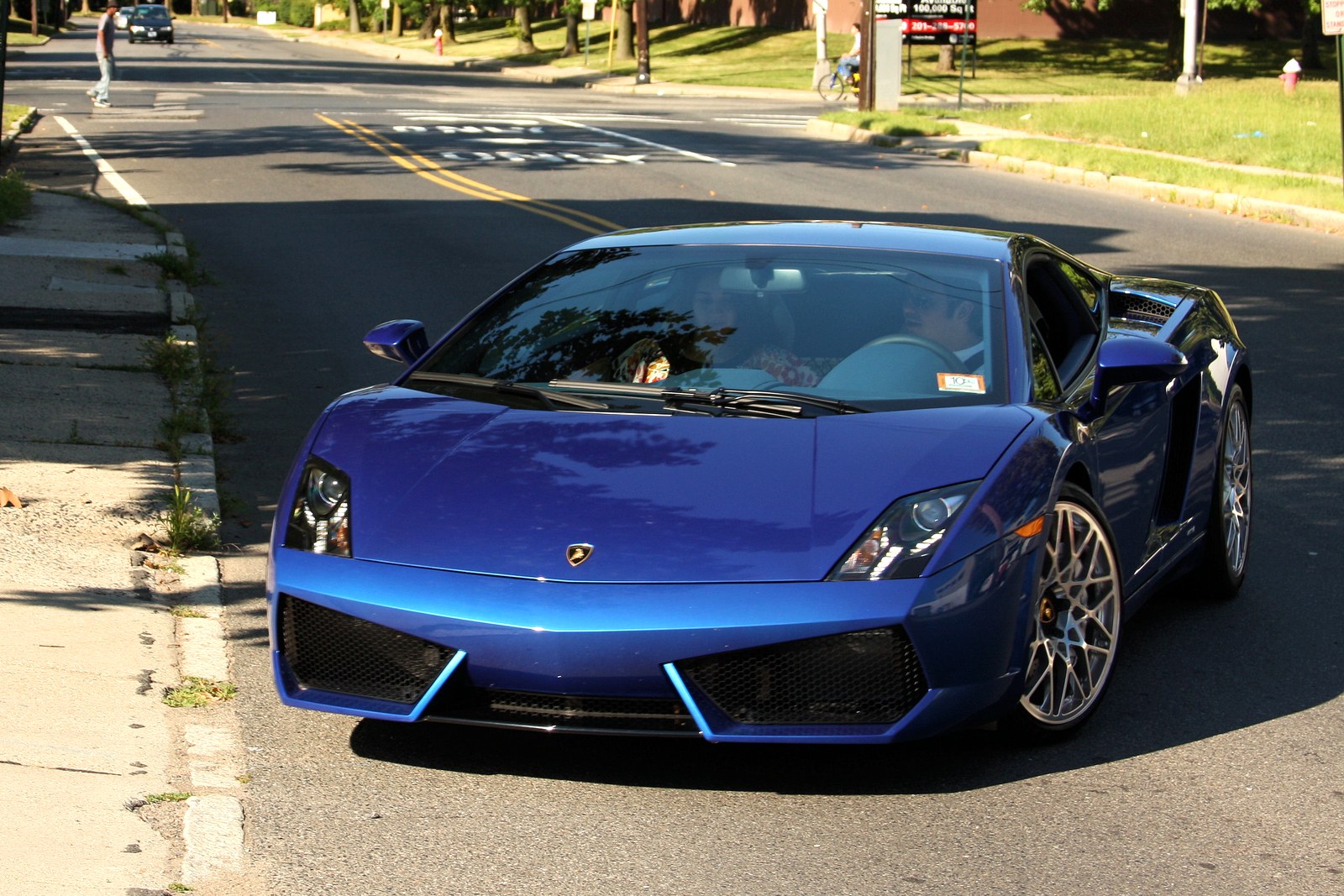
Lamborghini Gallardo LP560-4. Photo: Damian Morys, CC BY 2.0, via Wikimedia Commons.
Porsche 911 Turbo (996 and 997): the Mezger engine
Here's the reassuring chapter. The 996 Turbo (from the 2001 model year) and 997 Turbo use the race-derived "Mezger" flat-six, not the engine in the regular Carrera. That means no IMS-bearing worry (Classic Motorsports). Hagerty calls the 997 Turbo's Mezger "an incredibly reliable unit," with one caveat (Hagerty).
The caveat: bonded coolant pipes. Some coolant pipe stubs are glued, not press-fit, into cast housings. After enough heat cycles the adhesive can let go, and the pipe can pull out, dumping coolant fast (SharkWerks). Hagerty notes the bond can fail under hard use. The standard fix is to pin or weld the pipes, which Hagerty calls good insurance (Hagerty). On the 997.1 Turbo, 911Finder puts the job at about €2,500 to €5,000, because the engine usually has to come out (911Finder). A car with documented pinning or welding is a plus.
Other items to check: aging turbo and intercooler hoses, clutch and flywheel noise on manual cars (911 Buyers), and the 997 Turbo's variable-geometry turbos, which can stick on cars that sit unused (911Finder). Hagerty adds that routine maintenance is fairly expensive because access is poor and many jobs need the engine at least partly lowered (Hagerty). If the car has been tuned, our turbo-tune explainer covers what to ask.
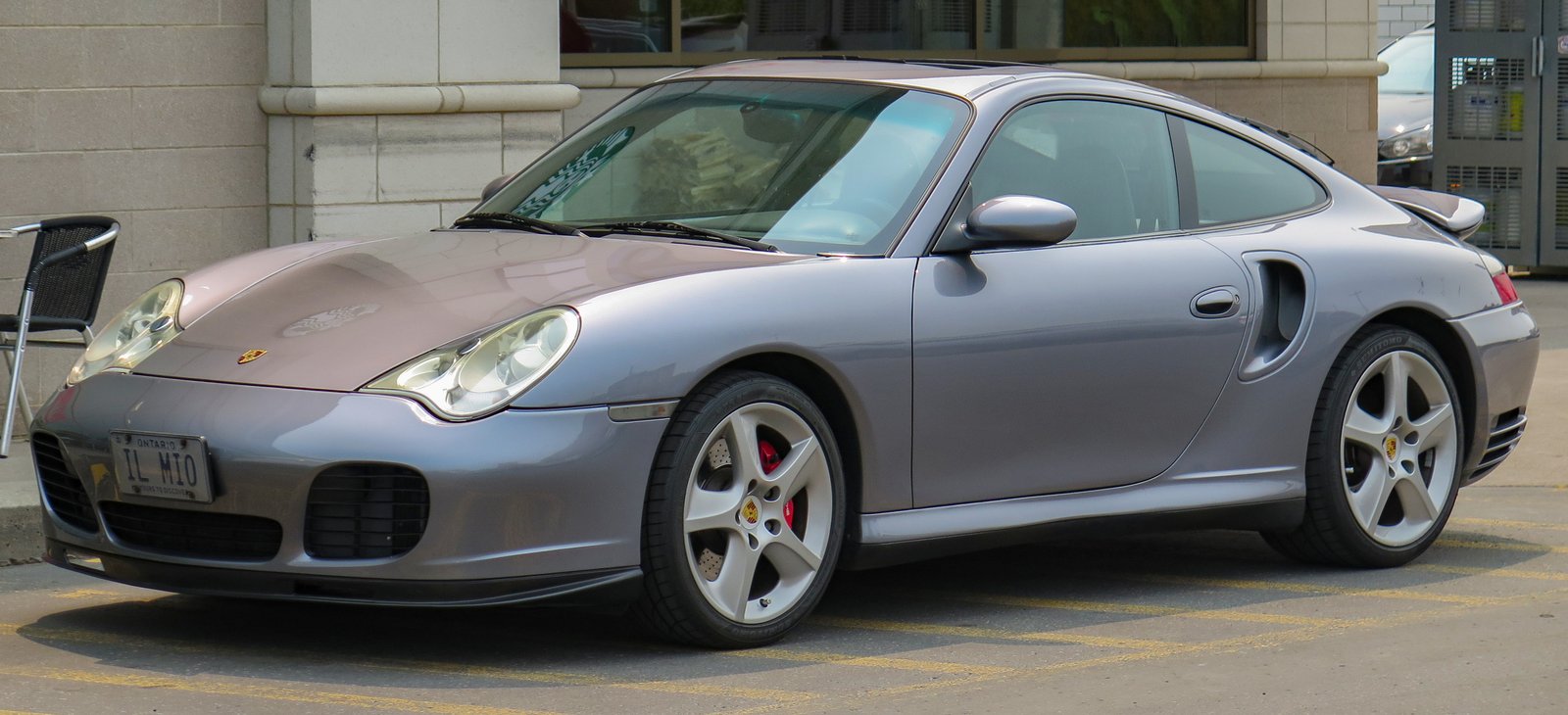
2002 Porsche 911 Turbo (996). Photo: Elise240SX, CC BY-SA 4.0, via Wikimedia Commons.

Porsche 911 Turbo (997). Photo: Alexandre Prevot from Nancy, France, CC BY-SA 2.0, via Wikimedia Commons.
Lotus Elise and Exige: the Toyota heart
The Series 2 Elise and the 2006 to 2011 Exige sold in the US use Toyota's 1.8-liter 2ZZ-GE engine and six-speed gearbox from the Celica GT-S (Road & Track). A Lotus specialist quoted by evo called the Toyota engine "bulletproof" and noted it has no timing belt (evo). Grassroots Motorsports reports seeing the same engine pass 250,000 miles in Toyotas (Grassroots Motorsports).
The small part that matters: lift bolts. The 2ZZ's variable valve lift uses two small rocker-shaft lift bolts. Lotus parts specialist Elise Shop calls them a wear item and recommends replacing them every 40,000 miles (60,000 km) on a road car. A part costs a few euros. If one shears and drops into the valvetrain, the damage can be severe (Elise Shop). Owners on LotusTalk also recommend cleaning the oil control valve filter for the variable-lift system every 30,000 to 50,000 miles (LotusTalk owner report).
Other Lotus notes: Grassroots Motorsports recommends oil changes at no more than 5,000 miles and says stock rear toe links can work loose or break on tracked cars. On supercharged cars, evo advises checking the second-to-third shift from cold for crunching synchros (Grassroots Motorsports; evo). Road & Track lists aging electronics, brittle trim, leaks through the roof seal and clamshells that are costly to replace after even a minor crash (Road & Track).

2004 Lotus Elise 111S, Toyota 2ZZ-powered. Photo: Calreyn88, CC BY-SA 4.0, via Wikimedia Commons.

2016 Lotus Exige S, a later V6 car shown for comparison. Photo: Calreyn88, CC BY-SA 4.0, via Wikimedia Commons.
Cooling, suspension and tires
Cooling. The 911 Turbo's three front radiators and A/C condenser sit low and are easily damaged (Classic Motorsports). Debris collects in front of them, and owners report cleaning it out as an annual job (Reddit owner reports). SharkWerks recommends replacing all rubber coolant hoses on Mezger cars more than 10 years old during coolant work (SharkWerks). On the Gallardo, a degrading cooling system is listed as a typical age-related item (Performance Car Intelligence).
Suspension. On the F430, suspension joints and bushings are routine wear items, and the fix is straightforward but costly (Octane Files). Gallardo suspension is "straightforward and easy to maintain," according to Hagerty (Hagerty). On a test drive, listen for knocks over bumps.
Tires and brakes. Check tire date codes, not just tread depth, and measure pads and rotors. Carbon-ceramic rotors are expensive (911 Buyers). 911Finder puts replacement PCCB discs on the 997 Turbo at more than €5,000 per axle (911Finder). Hagerty warns that a new set of Gallardo tires is pricey, so check tread wear (Hagerty). For how supercar tires age and why compound matters, see our supercar tire guide.
Consumables and the true annual running cost
Below are the big-ticket items with the prices their sources published. Dollar figures are US specialist prices. Pound and euro figures are UK and European specialist prices, left unconverted.
| Car | Item | Interval or trigger | Published cost | Source |
|---|---|---|---|---|
| Ferrari 360 | Major service with timing belts | Every 3 to 5 years, depending on use | From $7,985 at one specialist (owner reports: just under $5,400 years earlier; $11,325 for a full major) | Hagerty UK; J. Scuderia; FerrariChat |
| Ferrari 360 F1 | Clutch kit, fitted | Up to about 30,000 miles; read the wear | From $7,650 (coupe) to from $8,185 (Spider) at one specialist | Hagerty UK; J. Scuderia |
| Ferrari F430 | Exhaust manifolds | When cracked | £1,700 used set to £6,000-8,000 per side OEM fitted | FOC UK; BAF Motorsport |
| Ferrari 360/F430 | Sticky trim refinish | Cosmetic | $90 to $400 per part | Sticky No More |
| Gallardo e-gear | Clutch, usually with flywheel | 5,000 to 20,000 miles typical | $5,000 to $13,600+ | Hagerty; Go-Parts; PCI |
| 911 Turbo (997.1) | Pin or weld coolant pipes | Once, preventive | €2,500 to €5,000 | 911Finder |
| 911 Turbo (997) | PCCB discs, if fitted | When worn or chipped | More than €5,000 per axle | 911Finder |
| Elise/Exige (2ZZ) | Lift bolts | About every 40,000 miles | A few euros in parts | Elise Shop |
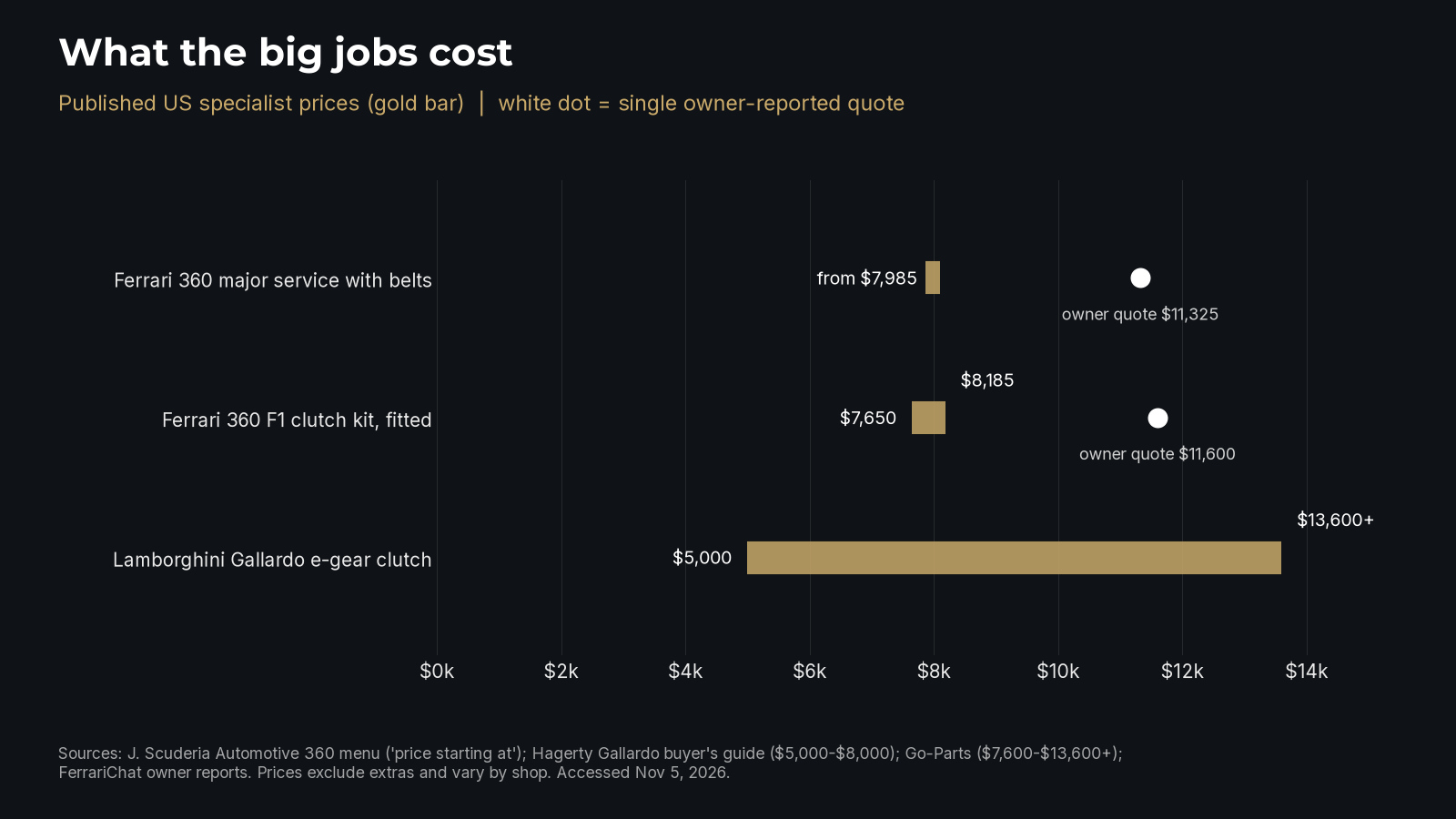
What the big jobs cost. Sources: J. Scuderia Automotive, Hagerty, Go-Parts, FerrariChat owner reports. Tap or click to enlarge.
So what does a year cost? Hagerty UK offers the clearest benchmark for the 360. Budget £2,000 a year for maintenance "and you shouldn't encounter any unexpected bills" (Hagerty UK). That covers servicing, not the clutch. In the US, J. Scuderia's menu starts at $895 for a basic annual 360 service, and its two-year service with all fluids starts at $1,349 (J. Scuderia Automotive).
A practical way to budget is to add the following:
- Routine servicing: the annual service your specialist quotes.
- The scheduled big job, prorated: for example, a 360 belt major divided by the three to five years between belt changes.
- A wear fund: clutch life on an automated manual depends on the reading, not the calendar. Divide the published clutch cost by the miles the clutch has left, then multiply by your annual mileage.
- Tires and brakes, based on use and tire age.
- The signature fix, once: unless it's already in the records, set aside money for the F430 manifolds or the Turbo's coolant pipes.
For contrast, the newer cars. A new Ferrari comes with Ferrari's seven-year Genuine Maintenance program, which covers scheduled servicing for the first seven years and transfers to later owners within that period (Ferrari). A recent 296 GTB can therefore cost less to service in its first years than a 20-year-old 360, though it costs far more to buy. A newer car like a McLaren 750S trades the known quirks of older exotics for complexity that is still under warranty. That's a different kind of peace of mind.
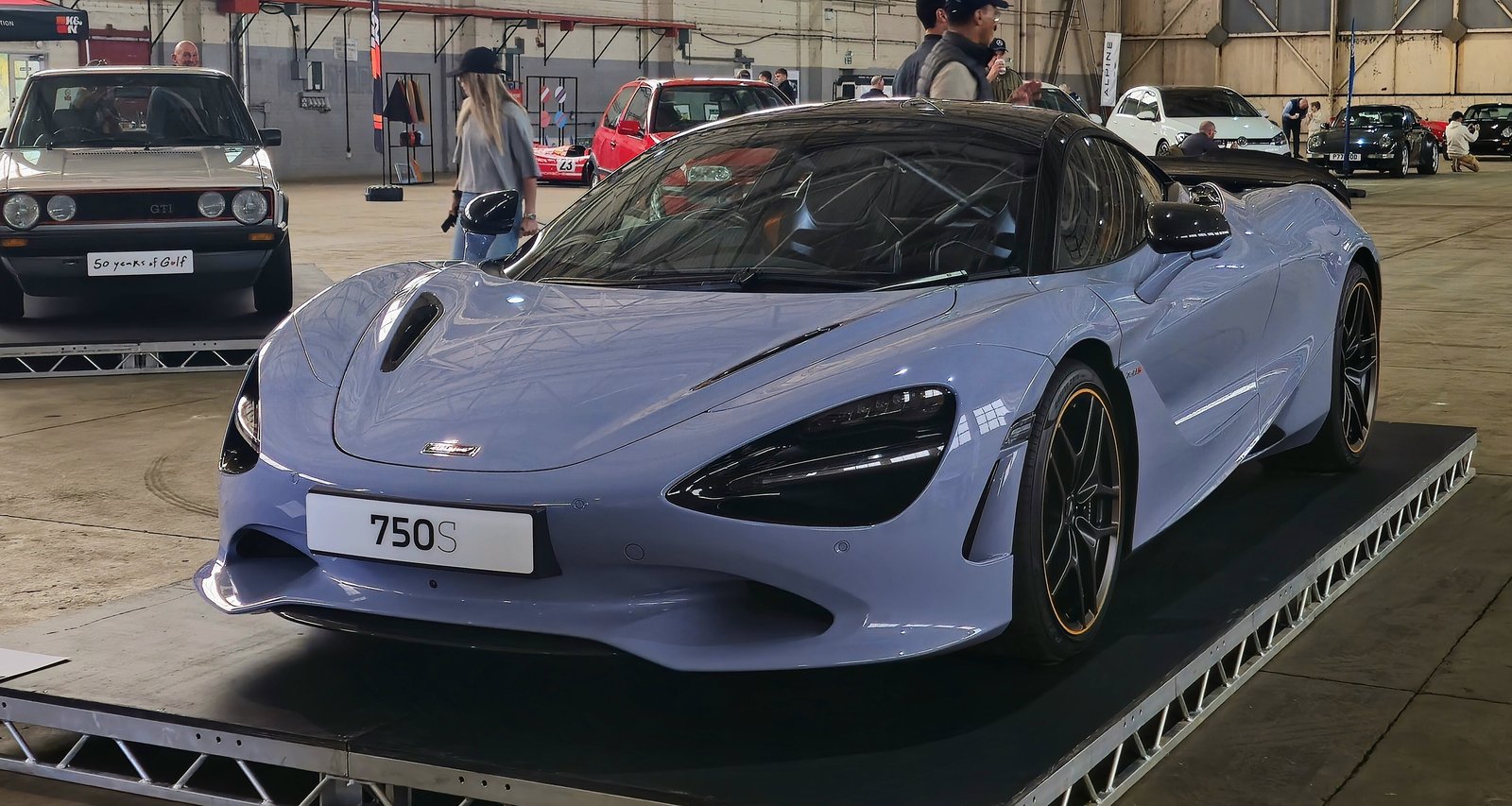
2024 McLaren 750S, one of the newer contrast cars. Photo: Calreyn88, CC BY-SA 4.0, via Wikimedia Commons.
How the market ties in
The mechanical picture shows up in prices. Part 1 found that the median 2026 Bring a Trailer sale for these cars ranged from about $46,000 for the Elise to about $196,000 for the F430 (Part 1). On a $100,000 car, a $5,000 to $13,600 clutch job or a pair of F430 manifolds is a meaningful share of the price. Buyers and sellers know that, so documented fixes and fresh clutch readings tend to support asking prices. Hagerty explicitly suggests using a Gallardo clutch-wear reading as a bargaining tool, and notes that manual-gearbox Gallardos typically sell for about 50% more than e-gear cars (Hagerty). Classic Motorsports adds that a proper 911 Turbo inspection should check the ECU for past over-revs (Classic Motorsports). That's another item that can move the price.
Want examples to study? These current Exotics Group listings cover the cars discussed here.
- 2003 Ferrari 360 Modena: ask for the belt-service date and an F1 clutch reading.
- 2007 Ferrari F430: ask about manifold history.
- 2008 Lamborghini Gallardo: ask for a dated e-gear clutch reading.
- 2002 Porsche 911 Turbo (996) and 2008 Porsche 911 Turbo (997): ask whether the coolant pipes have been pinned or welded.
- 2006 Lotus Elise: ask about lift-bolt replacement.
- For contrast, a 2025 McLaren 750S.
The bottom line
None of these cars is unusually unreliable. Each just has a well-known list of costs that comes with owning it. Find out which items on that list have already been handled, have a specialist read the clutch and check the signature item, and budget for the rest. The 360 needs belts, the F430 needs good manifolds, the Gallardo needs a measured clutch, the 911 Turbo needs secured coolant pipes and the Lotus needs two small bolts. Handle those and the car is mostly about driving.
Save the cars you're considering and get new listings first. Create a free account.
Sources
- Hagerty UK, Buying Guide: Ferrari 360 (1999-2004)
- Sports Car Market, Buyer's Guide to the Ferrari 360
- J. Scuderia Automotive, 360 Service Menu
- FerrariChat (owner reports), Cost of a 360 Major Service and Clutch
- FerrariChat (owner reports), How to understand F430 clutch usage number
- Ferrari Owners' Club UK, Buying an F430 (PDF)
- Magneto, 2004-2009 Ferrari F430 buying guide
- BAF Motorsport, Ferrari F430 manifold issues
- Octane Files, Ferrari F430 common problems
- Maseratinet, Ferrari F430 exhaust manifolds
- Sticky No More, Ferrari 430 interior refinishing pricing
- Hagerty, Your Handy 2004-13 Lamborghini Gallardo Buyer's Guide
- Performance Car Intelligence, Lamborghini Gallardo Buying Guide
- Magneto, 2003-2013 Lamborghini Gallardo buying guide
- Go-Parts, Gallardo clutch and flywheel costs
- Classic Motorsports, Porsche 996 Turbo buyer's guide
- 911 Buyers, Porsche 996 Turbo and Turbo S Buyer's Guide
- Sports Vehicle Performance, Porsche 996 Turbo Buyer's Guide
- SharkWerks, GT1 coolant pipe prevention and fix
- Hagerty, Your Handy 2005-12 Porsche 911 (997) Buyer's Guide
- 911Finder, Porsche 997.1 Turbo buyer's guide
- Reddit r/996 (owner reports), 996 Turbo purchase advice
- Road & Track, Lotus Elise Buyer's Guide
- evo, Lotus Elise S2 buying checkpoints
- Grassroots Motorsports, Lotus Elise tech tips
- Elise Shop, Camshaft lift bolt / lock pin
- LotusTalk (owner reports), Lift bolts and oil control valve filter
- Ferrari, Car services and 7-Year Genuine Maintenance