 exoticsgroup.com
Behind the Garage Door: Three Great Car Collections That Refuse to Sit Still

 | By Marco Bianchi, Experiential Storyteller, Exotics Group |
Picture a city block in Center City Philadelphia in the 1990s. Rowhouses, delivery trucks, a coffee shop, and somewhere near 8th and Lombard Streets a multi-level garage so ordinary that you would walk past it without a second glance. Behind its curtains, though, sat some of the most important racing sports cars in the world. The man who owned them spent his weekdays as a neurosurgeon. On the right day, if you had made an appointment, he might have shown you around.
That garage really existed. According to the Simeone Foundation Automotive Museum, Dr. Frederick Simeone kept his collection in a "private, nondescript multi-level garage" in Center City from 1982 until 2008, and from the outside "one would have never known the wonders which were stored inside behind the curtains." It is the kind of detail that captures what makes private collections so magnetic. They begin as one person's obsession, kept behind one door. The great ones end up belonging, in a sense, to everyone.
This is a story about three such collections in Philadelphia, Naples and Los Angeles, and about the people who decided that rare cars are not trophies to be sealed away. They are machines with stories, and they deserve to be studied, shared and, yes, driven.
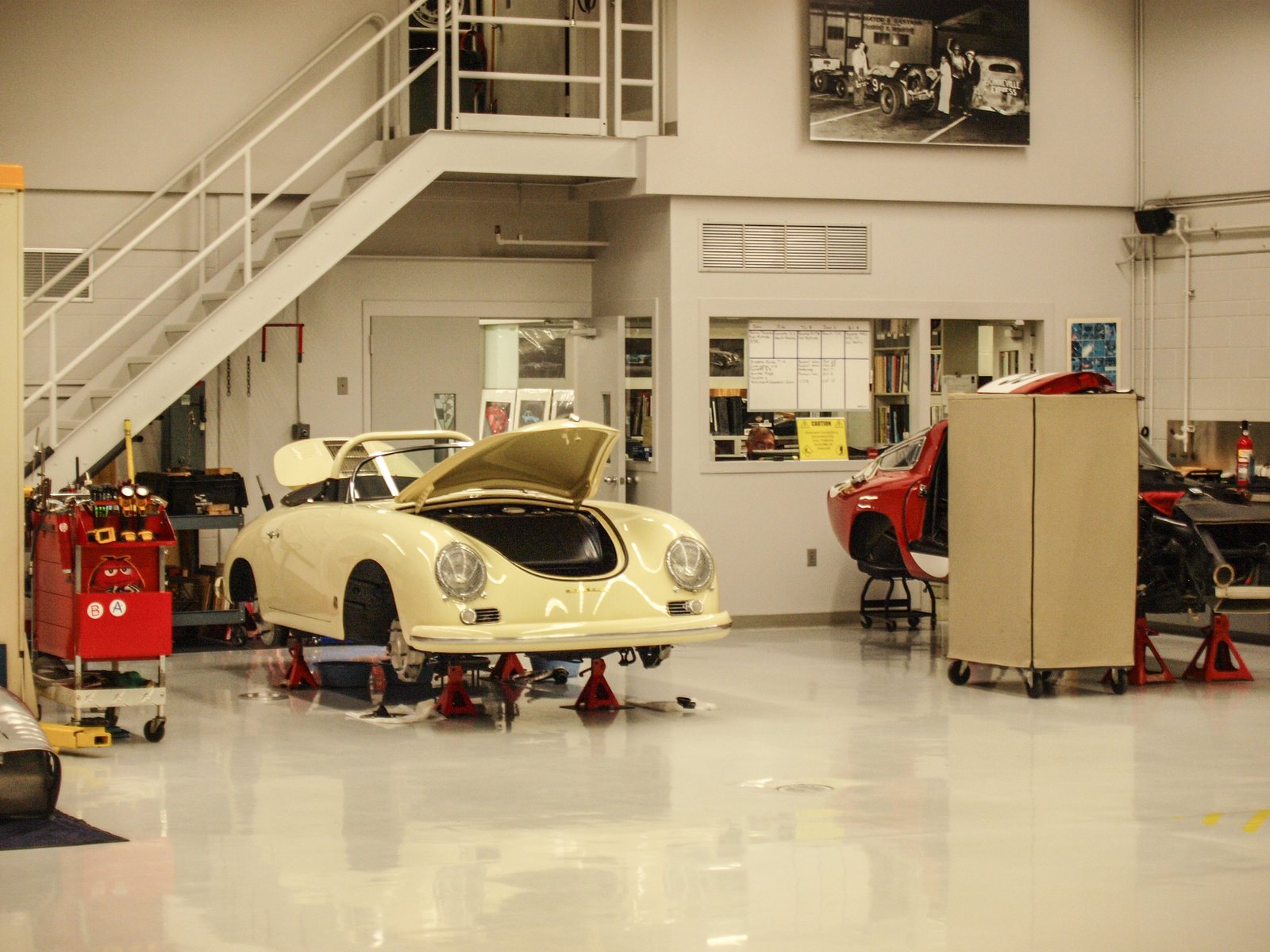
The doctor's garage
Fred Simeone's collection started with grief and a small inheritance. His father was a general practitioner who saw patients out of a rowhouse in Philadelphia's Kensington neighborhood and loved cars. Young Fred went along on house calls and, later, on trips to scrapyards. When his father died in 1972, Wikipedia's account of the museum's history says, the son was left with $8,000 and four cars kept in a garage on Clearfield Street.
He had been collecting something else since boyhood: paper. In a 2019 interview quoted in the Philadelphia Inquirer's obituary, Simeone remembered the Free Library of Philadelphia giving him a card that named him a "curator" and asked manufacturers to hand over their current literature. "I went around for years collecting it," he said. Decades later, his museum acquired the library's collection of car manuals and documents.
Over the next four decades the cars multiplied, and they were never chosen for their shine. The museum's spokesperson, William Murphy, told the Inquirer that when Simeone had the chance to buy a car, "he would buy the car that had more of the racing heritage. He didn't care if it had scrapes and scuffs because to him that was all part of the story." Murphy also passed along a story the doctor liked to tell: he would be on the road collecting a new find when the hospital called, and he would "close the deal, jump in the car, and speed off to save the day."
In June 2008 that private passion became public. The Simeone Foundation Automotive Museum opened on June 17 in a building on Norwitch Drive in Southwest Philadelphia that had once housed an engine remanufacturing company. Simeone gave the entire collection to the foundation, which owns the cars' titles today. His organizing idea was "the spirit of competition," the argument that racing improves the breed. "There are few examples of the effects of competition as dramatic and beautiful as the evolution of the racing sports car," he said when the museum opened.
Walk the floor today and you can see the argument play out in scenery. The cars sit in dioramas modeled on the circuits where they actually raced: Watkins Glen, Bonneville, Sebring, the Mille Miglia, Le Mans. The museum has twice been named "Museum of the Year" at the International Historic Motoring Awards in London, and in 2019 the Classic Car Trust ranked Simeone's collection at the top of its list.
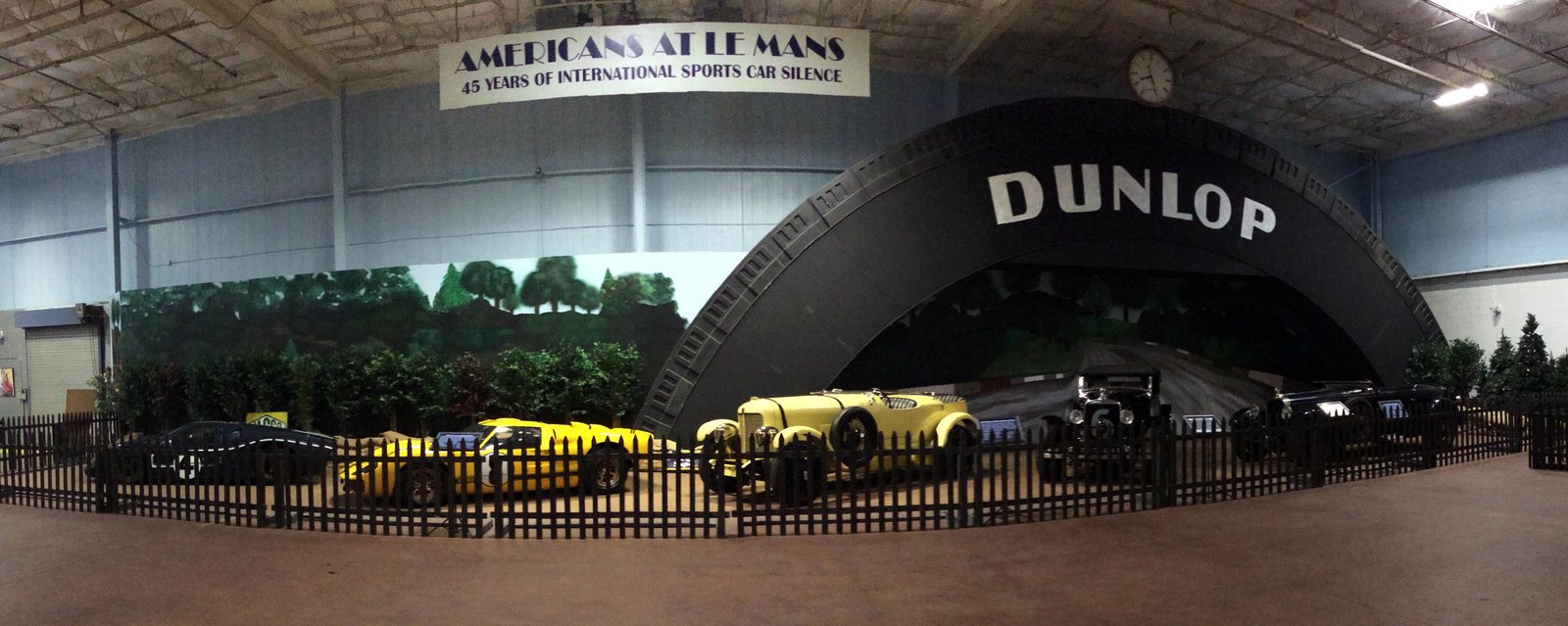
Asked which car he loved most, Simeone pointed to the 1938 Alfa Romeo 8C 2900B that won that year's Mille Miglia. "It represents the high-water mark of automotive design," he told former Inquirer columnist Art Carey. "I'm totally in love with that car." Dr. Simeone died in June 2022 at 86, on the weekend of the 24 Hours of Le Mans, a coincidence his museum colleagues found fitting. By the Inquirer's account, his own daily driver was a basic BMW.
Exercise, not embalming
The quickest way to understand the Simeone philosophy is to show up on a Demo Day. The museum describes these days as a chance to see historically significant racing sports cars "not only as works of design and engineering, but as living machines in motion." The routine is set out in the museum's schedule. Scrutineering starts around 11 a.m., when visitors can get close to the featured cars before they run. At noon comes a presentation on the history, and then the cars go out on the museum's three-acre tarmac.
Here is what that looks like from the rope line. This is an illustrative scene, not reportage. A pre-war racer coughs once, twice, and catches. Blue-gray smoke drifts across the lot and carries the smell of hot oil and rich fuel. Conversations stop mid-sentence. A child who has been tugging at a parent's sleeve goes completely still. A car that looked like an artifact a minute ago is suddenly a machine with a temper.
The 2026 calendar still has two dates to go. On November 14, "Yankee Iron!" brings out early American muscle: a 1911/1913 Mercer Series 35J Raceabout, a 1912 Hudson Mile-A-Minute Roadster, a 1916 Stutz Bearcat, a 1928 Stutz BB Blackhawk Roadster and a 1929 Stutz Model M Le Mans Speedster. On November 28, the People's Choice Awards let visitors' votes decide what runs. Demo Days are included with general admission, and parking is always free.
The museum also opens its doors to cars owned by the public. Through October 25 it is hosting "Foxbody: The People's Mustang," 26 third-generation Mustangs and relatives covering 15 model years. The lineup runs from factory-original survivors to Saleens, drag cars and a 1992 Mustang LX Coupe SSP state police car. Seeing a neighbor's cherished 5.0 parked in the same building as Le Mans winners says a lot about what this place values. What earns a car its spot is the story it carries, not its auction estimate.
Naples: the working museum
More than a thousand road miles south, in Naples, Florida, another collector built his own case for keeping old cars honest. Miles Collier, a former racing driver, bought the legendary Cunningham Museum collection from family friend Briggs Swift Cunningham in the mid-1980s. Collier went on to found Revs Institute, which is home to the Miles Collier Collections: more than one hundred significant automobiles built between 1896 and 1995, displayed across four galleries named Automobility, Vitesse, Revs and Porsche.
Revs calls itself a working museum, and it has the plumbing to back that up. The building covers 80,000 square feet on three stories. The institute says it is pressurized and the air is twice-filtered to keep contaminants away from the collection. Even so, the cars sit without protective barriers. You can lean in close enough to see the weave of a seat or the scratches on a gauge bezel. The collection is maintained by full-time restoration technicians, and the institute says the cars stay operational and "continue to demonstrate their engineering prowess on racetracks and roadways the world over."
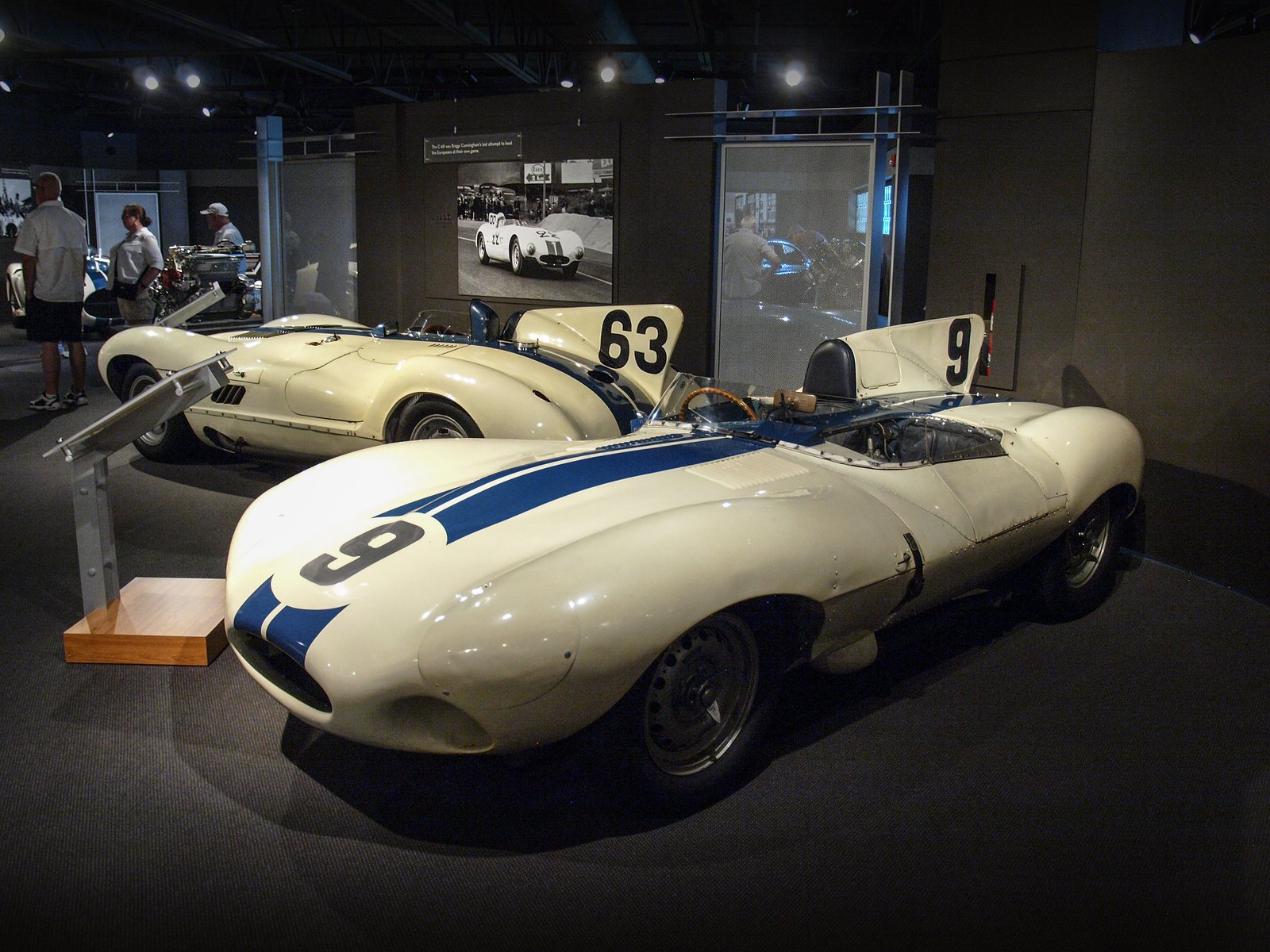
What sets Revs apart is how it handles imperfection. Collier has argued for years that wear is information. "Many of these battle scars, imperfections and the wear and tear represent real history," he said in a Revs feature on patina. "Each tells its own story and each separate one car from another. That is why we preserve them." The same feature describes waviness in the right rear fender of the collection's 1967 Porsche 911R. Collier suspects it simply "came out of the mold wrong," and since period photographs show the same flaw, it stays. A crack in the bodywork of the 1971 Porsche 917K is treated with the same respect.
That doesn't mean nothing ever gets fixed. When the collection's 1958 Scarab was badly damaged in a vintage race, Revs rebuilt it. Because the team had already decided the car would not race again, they refitted the original parts that had been stored away during its competition years. In the institute's words, the Scarab on display now "has more of its original DNA than when it raced."
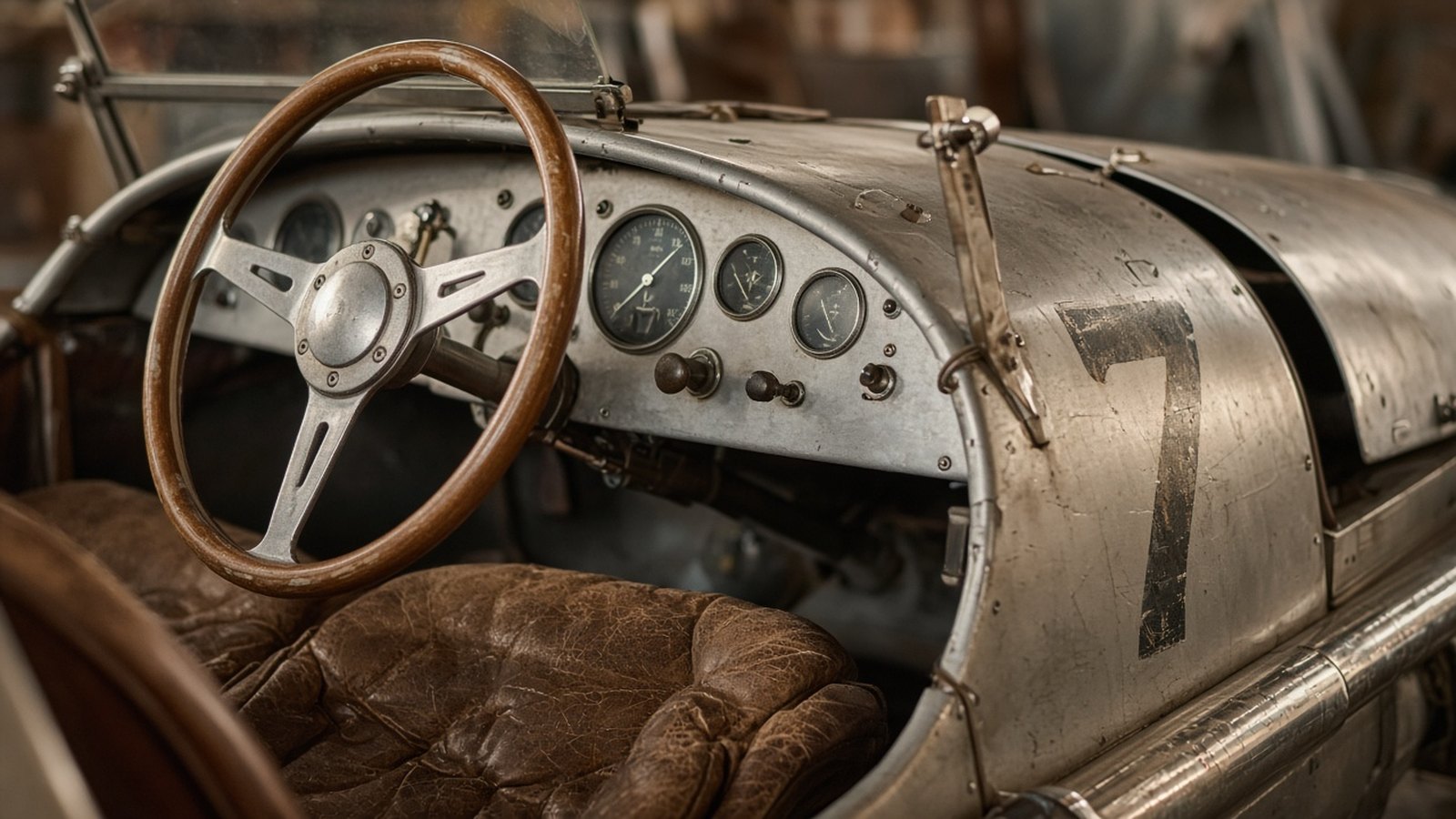
Collier spelled out the stakes in his opening chapter for Fred Simeone's book, The Stewardship of Historically Important Automobiles: "Once the evidence of an object's travel through time disappears, history disappears. For an historical object to lose its history is to lose its reality, the only thing of any great value in the first place." He also insists that "a car is a machine for moving," which is why the cars are kept running. Over-restoring a car, in his view, risks erasing exactly what makes it worth keeping.
Visiting Revs takes some planning, and the planning becomes part of the pleasure. The museum is open only on Tuesdays, Thursdays and Saturdays from 10 a.m. to 4 p.m. All tickets are sold online in advance for timed entry, with the last entry at 2 p.m. The two-hour Docent Tour and Workshop Walk-Thru, offered at 10:30 a.m. and 1 p.m., ends with a short walk through the shop where the cars are restored and maintained. Through November 28, a new Saturday-noon tour called "Driven By Design: Sports Cars and Self-Perception" traces sports car design from a 1912 Mercer to a 1995 McLaren. One note for your calendar: Revs will be closed from November 8 through 21 for a private event.
Los Angeles: the collection beneath the street
Not every great collection began in one private garage. In Los Angeles, the Petersen Automotive Museum on Wilshire Boulevard keeps its deepest secrets underground. The Vault, presented by Hagerty, sits on the museum's lower level and holds more than 300 cars, motorcycles and trucks spanning over 120 years. The Petersen promises turn-of-the-century machines, head-of-state cars, the personal rides of Hollywood legends, award-winning hot rods and "many other surprises." The display rotates constantly, so no two visits are quite the same.
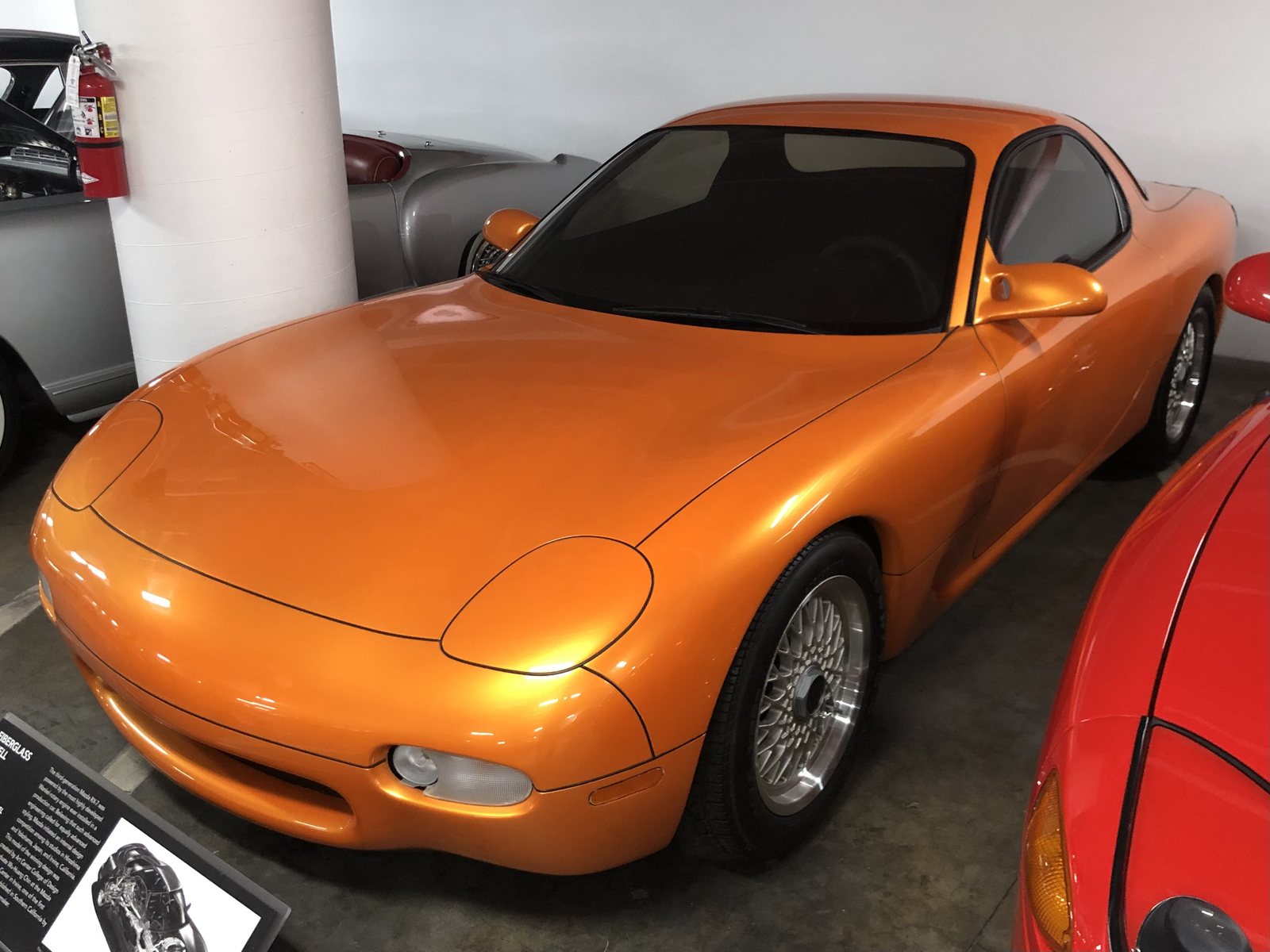
That rotation is the Vault's charm. It feels less like a gallery and more like the world's best-stocked storage garage. Cars sit nose to tail, and the surprise comes from what is parked next to what. One visitor in 2023 photographed a burnt-orange fiberglass shell that, according to its placard, was the concept model of the winning design for Mazda's third-generation RX-7. Art Center graduate Wu-Huang Chin created it at Mazda's design studio in Irvine, California. It's an unlikely neighbor for a pre-war classic, and that's exactly the appeal.
Adult admission with Vault access is $52. For something closer to a backstage pass, the Petersen runs a Saturday morning Shop Tour, limited to 25 guests. The tour covers general admission, Vault access and a guided Vault tour, and it also takes visitors into the museum's workshop area. Adult tickets are $99, and upcoming dates include October 24 and 31 and several Saturdays in November and December. Plan accordingly if you have little ones: the Petersen says children ages 4 and under are not allowed in the Vault or workshop area.
What the great collections teach the rest of us
Most of us will never own a Mille Miglia winner or a Cunningham D-type. But the ideas behind these places scale down remarkably well to a two-car garage and a weekend toolbox.
Drive them. Simeone's Demo Days and Collier's working museum share one conviction: a car that never moves slowly forgets how. Seals dry out, fluids settle and owners lose their nerve. Exercise is part of preservation.
Keep the scars. The stone chip from that canyon run, the scuffed sill from a decade of climbing in and out, the faded sticker from a long-gone club rally: by Collier's logic these are history, not damage. Think twice before you erase them.
Write it down. Simeone was collecting manufacturers' literature as a boy, and Revs runs a research library. Your receipts, photos, service records and the story of how you found the car are the beginning of its provenance. Someday someone will be glad you kept them.
Open the door. The Simeone collection was once viewable only by appointment behind a curtain in Center City. Now it is a public museum that invites Foxbody owners to share the floor. The best part of a collection is the conversation it starts, whether that happens at a museum, a cars-and-coffee meet or your own driveway with the garage door rolled up.
If you go
- Simeone Foundation Automotive Museum, 6825 Norwitch Drive, Philadelphia. Open Tuesday through Friday 10 a.m. to 6 p.m. and weekends 10 a.m. to 4 p.m.; closed Mondays. "Foxbody: The People's Mustang" runs through October 25. Upcoming Demo Days are November 14 ("Yankee Iron!") and November 28 (People's Choice).
- Revs Institute, Naples, Florida. Open Tuesday, Thursday and Saturday, 10 a.m. to 4 p.m., by advance timed ticket only. Closed November 8 through 21.
- Petersen Automotive Museum, 6060 Wilshire Blvd., Los Angeles. Open daily 10 a.m. to 6 p.m. The Vault is included with Vault admission, and Saturday Shop Tours are limited to 25 guests.
Back in that Center City garage, the curtains are long gone and the cars have new homes where anyone can hear them run. Their real lesson is simple: a great car is meant to be shared and driven, not hidden. So this weekend, roll up your own garage door, let the morning light hit the paint, and take yours somewhere worth remembering. Then come home and add one more good scar to the story.
Sources
- Simeone Foundation Automotive Museum, 2026 Events and Demo Days schedule
- Simeone Foundation Automotive Museum, What are Demo Days?
- Simeone Foundation Automotive Museum, Before the Museum
- Simeone Foundation Automotive Museum, Introduction to "The Spirit of Competition"
- Simeone Foundation Automotive Museum, Foxbody: The People's Mustang
- The Philadelphia Inquirer, Dr. Fred Simeone, former Penn neurosurgeon, leaves legacy of fast cars and a world-class museum (June 13, 2022)
- PR Newswire via The Auto Channel, Simeone Foundation Museum opening announcement (June 11, 2008)
- Wikipedia, Simeone Foundation Automotive Museum
- Revs Institute, About Revs Institute
- Revs Institute, Visit the Museum
- Revs Institute, Tickets
- Revs Institute, The Wear and Tear of Time
- Revs Institute, Miles C. Collier
- The ClassicCars.com Journal, When restorations lose touch with historic reality
- Petersen Automotive Museum, The Vault Presented by Hagerty
- Petersen Automotive Museum, Tickets
- Petersen Automotive Museum, Museum Events
- Petersen Automotive Museum, Workshop (Shop) Tour
- Wikimedia Commons, Mazda RX-7 FD concept car in the Petersen Museum Vault


